
Focusing on the caramelization process, this recipe explores how the slow, deliberate browning of onions transforms a humble soup into a deeply flavorful, almost meditative kitchen ritual. It’s about embracing the mess and patience, savoring the smell of sweet onions turning amber while the kitchen fills with a smoky, comforting aroma. This isn’t just about the final bowl—it’s about appreciating the quiet, transformative art of building layers of flavor over time.
There’s something oddly satisfying about watching a mountain of sliced onions slowly shrink and turn a rich, golden brown. It’s a bit chaotic—stirring, caramelizing, waiting—but each step feels like a small victory. The smell alone, a deep, sweet aroma with hints of charred sugar, makes the whole kitchen smell like a cozy, slightly smoky refuge.
Focusing on the caramelization process, this recipe explores how the slow, deliberate browning of onions transforms a humble soup into a deeply flavorful, almost meditative kitchen ritual. It’s about embracing the mess and patience, savoring the smell of sweet onions turning amber while the kitchen fills with a smoky, comforting aroma. This isn’t just about the final bowl—it’s about appreciating the quiet, transformative art of building layers of flavor over time.
The meditative process of caramelizing onions
- There’s a certain magic in patiently caramelizing onions; it turns a simple step into a fragrant, almost hypnotic ritual.
- Watching the onions turn a deep amber always sparks a nostalgic rush, reminding me of my grandmother’s kitchen on cold evenings.
- The smell of bubbling broth with sweet onions is oddly comforting—like a warm hug in a bowl on a rainy day.
- I love how this soup demands patience; it’s a little chaotic at first, but the payoff is a spoonful of richness that’s worth every minute.
- Every time I make this, I’m reminded that the simplest ingredients, treated with care, can create something truly soulful.
The story behind this recipe
- I first learned about this version of French Onion Soup during a rainy weekend in Paris, wandering through a tiny bistro. The bubbling, golden broth and sweet, caramelized onions immediately felt like a warm hug after a long day. That moment stuck, and I’ve been chasing that comforting, soulful bowl ever since.
- What keeps me coming back is the transformation of humble ingredients—onions, broth, bread—into something richer and deeper with patience. It’s a messy process, but the smell alone, of onions slowly caramelizing and the broth simmering with herbs, makes the entire kitchen feel like a cozy hideaway. It’s a dish that’s as much about the process as the final spoonful.
- heading: The story behind this recipe
Historical and Cultural Trivia
- French Onion Soup dates back to Roman times, where ancient recipes used boiled onions and bread for sustenance.
- The modern caramelized onion technique became popular in 18th-century France, elevating humble peasant food to fine dining.
- Traditionally, this soup was a way for farmers to make the last of their stored onions last through the winter.
- The signature caramelization process is what truly defines the depth of flavor, making it a beloved classic worldwide.
Key ingredients and tips
- Yellow onions: I love using large, sweet onions—they turn a deep, fragrant amber as they caramelize. Skip the sharp red ones for this; their bite doesn’t mellow as nicely.
- Beef broth: Rich, savory, with a smoky backbone. If you want a lighter touch, chicken or vegetable broth works—just expect a milder flavor.
- Butter: I prefer unsalted for control, but if you only have salted, cut back a bit on the added salt later. The butter gives a silky, golden base during caramelization.
- Thyme: Fresh sprigs add a woodsy, aromatic note that elevates the broth. Dried thyme is fine but use half the amount to avoid overpowering.
- Baguette slices: Toasted until crunchy—this adds texture and acts as a perfect bed for the melted cheese. Use day-old bread if fresh isn’t available; it crisps better.
- Gruyère cheese: Melts beautifully, with a nutty, complex flavor. Emmental or Comté can be good swaps, but avoid overly sharp cheeses that might overpower the sweetness of the onions.
- Dry white wine: Adds acidity and brightness. If you prefer not to use alcohol, a splash of apple cider vinegar diluted with water can mimic those bright notes.
Spotlight on key ingredients
Yellow onions:
- I love using large, sweet onions—they turn a deep, fragrant amber as they caramelize. Skip the sharp red ones for this; their bite doesn’t mellow as nicely.
- Beef broth: Rich, savory, with a smoky backbone. If you want a lighter touch, chicken or vegetable broth works—just expect a milder flavor.
Gruyère cheese and white wine:
- Gruyère cheese: Melts beautifully, with a nutty, complex flavor. Emmental or Comté can be good swaps, but avoid overly sharp cheeses that might overpower the sweetness of the onions.
- Dry white wine: Adds acidity and brightness. If you prefer not to use alcohol, a splash of apple cider vinegar diluted with water can mimic those bright notes.
Notes for ingredient swaps
- Vegetarian Broth: Swap beef broth for a rich vegetable or mushroom broth. It won’t have that deep, meaty aroma but still delivers umami.
- Cheese: Use Gruyère or Emmental, but for a sharper tang, try aged cheddar or mozzarella. Expect a different melt and flavor profile.
- Onions: Yellow onions are classic, but sweet Vidalia or Walla Walla onions caramelize beautifully and add a different sweetness.
- Wine: Dry white wine adds brightness; substitute with a splash of apple cider vinegar diluted with water if avoiding alcohol.
- Bread: Baguette is traditional, but sourdough or rustic country bread works well, giving a different texture and tang.
- Butter: Unsalted butter is preferred, but margarine or olive oil can be used—just expect a lighter, less creamy base.
- Herbs: Fresh thyme is key, but dried thyme or a pinch of dried oregano can add a different herbal note without losing flavor.
Equipment & Tools
- Large heavy-bottomed pot or Dutch oven: For even heat and slow caramelization of onions.
- Sharp knife: To slice onions uniformly for even cooking.
- Wooden spoon: For gentle stirring and scraping browned bits.
- Ovenproof bowls or crocks: To serve and broil individual portions.
- Baking sheet: To toast bread and broil cheese topping.
Step-by-step guide to French Onion Soup
- Gather your equipment: a large heavy-bottomed pot or Dutch oven, a sharp knife, wooden spoon, ovenproof bowls or crocks, and a baking sheet. The heavy pot ensures even heat for caramelizing onions without burning.
- Slice 4-5 large yellow onions thinly, about 0.3 inches. Consistency helps them cook evenly and turn uniformly golden.
- Heat the pot over medium-low (around 150°C/300°F). Melt 2 tablespoons of unsalted butter, allowing it to foam and smell nutty—about 30 seconds.
- Add the sliced onions in batches if needed, to avoid overcrowding. Stir well to coat all slices with butter. Cook gently, stirring every 5-7 minutes, until they start to soften and turn translucent, about 15 minutes.
- Lower the heat slightly, and continue cooking—stirring often. After 20-25 minutes, onions should be soft, deep golden, and smell sweet with a hint of caramelization. If they start to burn, reduce heat or add a splash of water to deglaze.
- Pour in ½ cup of dry white wine, scraping the bottom to lift any browned bits. Let it simmer for 2-3 minutes until reduced by half, adding brightness and depth.
- Add 4 cups of beef broth, 2 sprigs of fresh thyme, a pinch of salt, and black pepper. Bring to a gentle simmer. Let it cook uncovered for 20-30 minutes, stirring occasionally, to deepen flavors. If it gets too thick, add a splash more broth or water.
- Taste and adjust salt, remove thyme sprigs. For a richer flavor, simmer longer for 10-15 minutes, keeping an eye on consistency.
- Preheat the oven to 200°C/400°F. Slice a baguette into ½-inch rounds, toast on a baking sheet until golden, about 8 minutes. Rub with a garlic clove if desired for extra aroma.
- Ladle the hot soup into ovenproof bowls. Top each with toasted bread slices, then sprinkle generously with grated Gruyère or similar melting cheese.
- Place the bowls on a baking sheet and broil until cheese bubbles and turns golden, about 3-5 minutes. Watch carefully to prevent burning.
- Remove from oven, let sit for a minute. Rest briefly to allow cheese to set slightly, then serve hot with a spoonful of broth and crispy cheese-topped bread.
Let the soup sit for a minute after broiling. Serve hot, with a piece of crispy toasted bread on top or on the side. The cheese should be gooey and slightly browned, the broth fragrant and rich. Enjoy the layered flavors as they meld at the table.
How to Know It’s Done
- Onions are deeply caramelized and golden brown, smelling sweet and smoky.
- Broth is rich, fragrant, and slightly thickened, with a bright aroma from wine and herbs.
- Cheese is melted, bubbly, and golden on top of the toasted bread, with a crispy edge.
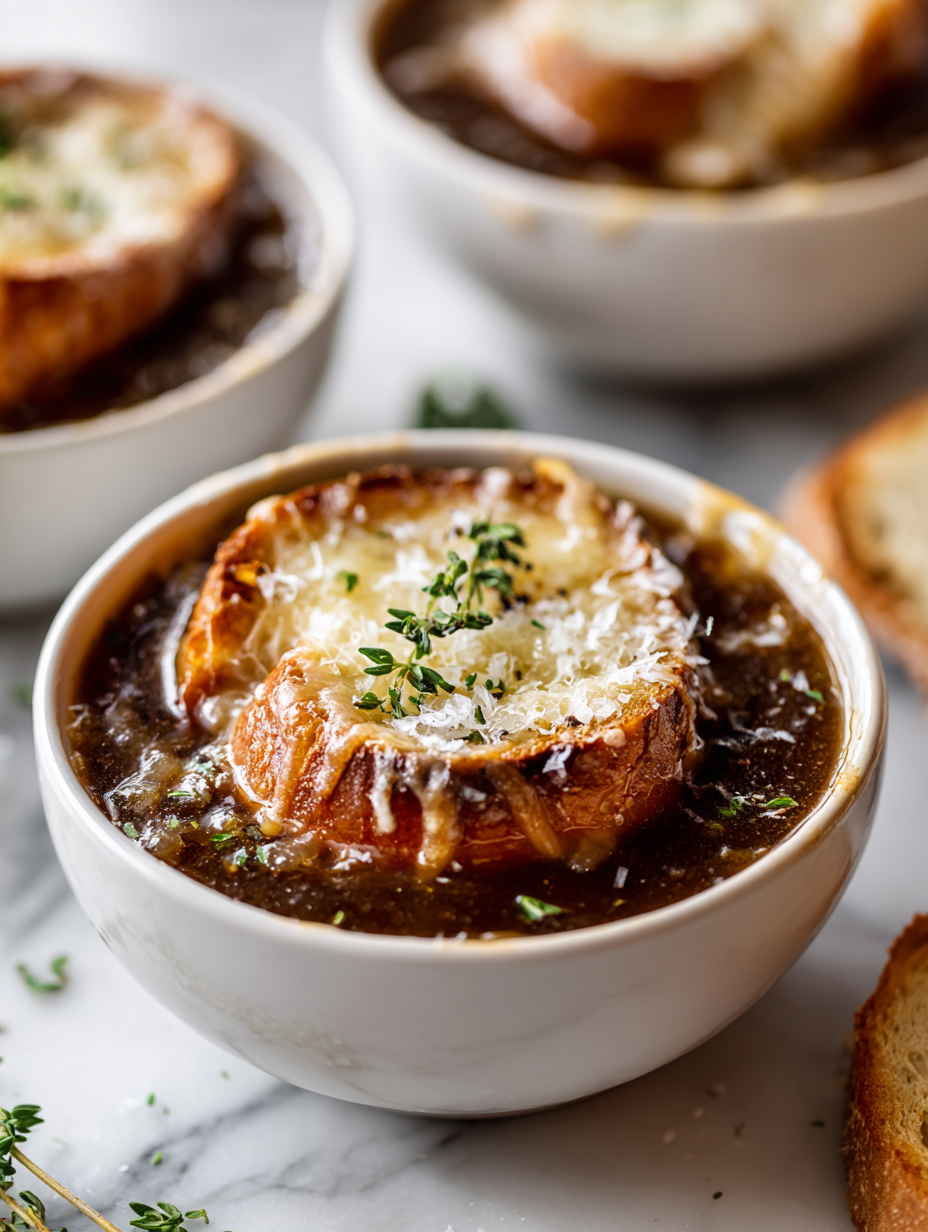
French Onion Soup
Ingredients
Equipment
Method
- Peel and thinly slice the onions uniformly, aiming for about 0.3-inch slices. This helps them cook evenly and caramelize beautifully.
- Warm your large heavy-bottomed pot over medium-low heat and add the butter. Wait until it melts and begins to foam gently, releasing a toasty aroma.
- Add the sliced onions to the pot, stirring well to coat them with butter. Cook gently, stirring every 5-7 minutes, until they soften and start to turn translucent, about 15 minutes. The onions will begin to release a sweet aroma.
- Continue cooking the onions over low heat, stirring frequently. After about 20-25 minutes, they will deepen in color to a rich golden amber and smell sweet and caramelized.
- Pour in the white wine, scraping the bottom of the pot with your spoon to loosen any browned bits. Let the wine simmer for 2-3 minutes until slightly reduced, adding brightness to the sweetness of the onions.
- Add the beef broth along with the sprigs of thyme. Bring the mixture to a gentle simmer and cook uncovered for 20-30 minutes, stirring occasionally to develop a rich, layered flavor. Season with salt and pepper to taste.
- Meanwhile, slice the baguette into ½-inch rounds and toast them on a baking sheet until golden and crispy, about 8 minutes. Optionally, rub the slices with a garlic clove for extra aroma.
- Remove the thyme sprigs from the soup and taste; adjust seasoning if needed. Ladle the hot soup into ovenproof bowls, placing a toasted baguette slice on top of each.
- Sprinkle the grated Gruyère generously over the bread and place the bowls on a baking sheet. Broil in the oven until the cheese bubbles and turns golden, about 3-5 minutes—watch carefully to avoid burning.
- Carefully remove the bowls from the oven and let sit for a minute. Serve hot, with the cheese melted and bubbly, and enjoy the rich, caramelized flavors in every spoonful.
Notes
Tips & Tricks for Perfect French Onion Soup
- caramelization: Use medium-low heat to develop rich, sweet flavors without burning the onions.
- stirring: Stir onions every 5-7 minutes to ensure even browning and prevent sticking or burning.
- deglazing: Scrape up browned bits with wine or broth to deepen flavor and add complexity.
- cheese layering: Grate cheese finely for quick, even melting and a gooey, golden topping.
- broiling: Watch the cheese carefully under the broiler; remove once bubbly and browned for perfect crunch.
- onion prep: Slice onions uniformly to promote even caramelization and consistent texture.
- patience: Caramelizing onions takes time—don’t rush the process, let the sugars develop slowly for best flavor.
Common mistakes and how to fix them
- FORGOT to watch the onions? Lower the heat and add a splash of water to prevent burning.
- DUMPED the cheese? Use a finer grater for even melting and better coverage on soup.
- OVER-TORCHED the bread? Keep a close eye during broiling; remove once cheese is bubbly and golden.
- MISSED the stirring step? Stir onions every 5-7 minutes for even caramelization and sweetness.
Quick Fixes for French Onion Soup
- When onions burn, splash in a little water to cool and loosen browned bits.
- If broth isn’t flavorful enough, add a splash of soy sauce or Worcestershire for depth.
- DUMPED the cheese? Patch with grated Parmesan for a sharper, salty finish.
- Over-torched bread? Shield it with foil and broil for just a minute to prevent burning.
- Splash a teaspoon of lemon juice into the soup if it tastes flat or dull.
Prep, store, and reheat tips
- Caramelized onions can be prepared up to 2 days in advance; store in an airtight container in the fridge, where they develop a richer, slightly sweeter flavor.
- Soup base can be made a day ahead; keep it covered in the fridge for up to 24 hours. Reheat gently, allowing flavors to meld and smell warm and inviting.
- Toast the bread slices ahead; keep in an airtight bag at room temperature for up to a day. Re-crisp briefly in the oven if they lose crunch.
- Reheat the soup on low heat, stirring occasionally, until steaming and fragrant—about 10-15 minutes. The cheese topping should be broiled fresh for the best texture.
- For longer storage, freeze the caramelized onions and soup separately for up to 2 months. Thaw overnight in the fridge, then reheat slowly, checking for flavor and aroma.
Top questions about French Onion Soup
1. Can I use red onions instead of yellow?
Look for large, sweet onions like yellow or vidalia—they caramelize better and develop a rich flavor. Red onions can be too sharp and won’t mellow as nicely during cooking.
2. What kind of broth is best for this soup?
A good beef broth should be deep, savory, and slightly smoky. If you want a lighter flavor, chicken or vegetable broth works, but it will lack some of that umami richness.
3. How long does caramelizing onions take?
Caramelizing onions takes patience—slow and steady over medium-low heat until they’re deeply golden and fragrant, about 30-40 minutes. Rushing will result in less flavor and potential burning.
4. How do I know when the cheese is ready?
Broiling cheese can burn quickly; keep a close eye and remove the soup once the cheese is bubbly and golden, usually 3-5 minutes under high heat.
5. Can I make the onions in advance?
You can prepare the caramelized onions a day ahead. Store them in an airtight container in the fridge for up to 2 days to deepen their sweetness and flavor.
6. What if my soup tastes bland or salty?
If the soup is too salty, dilute with a bit of water or add a splash of vinegar to brighten the flavor. If it’s bland, simmer it longer to concentrate the flavors.
7. Can I make this soup vegetarian?
For a vegetarian version, replace beef broth with mushroom or vegetable broth. Keep in mind that the flavor will be lighter but still delicious.
8. Should I buy pre-shredded cheese?
Use freshly grated Gruyère for the best melt and flavor. Pre-shredded cheese often contains anti-caking agents that prevent proper melting and result in a greasy topping.
9. How can I melt the cheese without a broiler?
If you don’t have a broiler, you can melt the cheese in the oven at 200°C (400°F) until bubbly, but watch carefully to avoid burning.
10. Can I freeze leftover caramelized onions?
Yes, freezing caramelized onions works well. Store in a freezer-safe bag for up to 2 months, then reheat gently on the stove to preserve flavor and texture.
This soup is a reminder that patience in the kitchen yields something richer, deeper, and more soulful. Each step, from slow caramelization to bubbling cheese, is a small act of care, creating a dish that feels both familiar and comforting. It’s a perfect way to embrace the season’s flavors and enjoy a moment of quiet culinary meditation.
In the end, it’s about those warm, smoky notes mingling with the sweetness of onions and the sharpness of melted cheese. There’s a certain satisfaction in knowing that a simple, humble ingredient like an onion can turn into something so layered and memorable. Sometimes, the best meals are the ones made slowly, with attention and a little bit of patience.

Hi, I’m Mason Harper, the voice and heart behind Rooting in Freshness. I’m so glad you’re here. This space was born from my love for seasonal ingredients, simple cooking, and the belief that food tastes better when it’s grown, chosen, and prepared with intention. Rooting in Freshness is more than a food blog to me. It is a reflection of how I live, cook, and connect with the world around me.


Leave a Reply