
This Crockpot Chicken Cacciatore is my answer to busy weeknights. I love how it transforms simple ingredients into something warm and satisfying without demanding my constant attention. Just a few hours in the slow cooker, and I come home to a fragrant, tender dish that tastes like it’s been simmering all day, even if it hasn’t.
There’s something honest about a meal that’s both effortless and deeply flavorful. I’ve come to rely on this recipe as a way to bring a little Italian comfort into my hectic life. It’s the kind of dish that feels like a hug, especially when you’re craving something hearty but don’t want to spend hours in the kitchen.
This recipe is my go-to for busy days when I want a hearty, comforting meal without the fuss of constant attention. It’s about harnessing the slow cooker to develop deep, tender flavors while I focus on other things, like helping kids with homework or catching a quick moment of peace. The beauty is in the simplicity—set it and forget it, but still end up with a dish that tastes like I simmered it all afternoon.
A Slow-Cooker Secret to Rich Flavors
- This dish reminds me of Sunday afternoons at my grandmother’s house, filling the air with roasted garlic and tomato sauce.
- I feel a wave of relief when I realize I can toss everything in the slow cooker and forget about it until dinner.
- There’s a quiet pride in knowing I’ve created something so rich and flavorful with minimal effort after a long day.
- Nothing beats the childhood nostalgia that hits when I smell those simmering peppers and herbs, pulling me right back home.
- I love how this meal turns simple ingredients into something deeply comforting, especially during busy weeknights.
The story behind this recipe
- This recipe came about because I needed a dinner that could handle my unpredictable evenings—something that wouldn’t demand constant attention but still delivered deep, soulful flavors. I remember trying it one chaotic Thursday, tossing in everything I had on hand—peppers, olives, chicken—and crossing my fingers. The result was a surprisingly rich, comforting stew that made me realize how much simplicity can shine when you let slow heat do its magic.
- Every time I make this, I think of those slow Sunday afternoons when my family would gather around a bubbling pot, sharing stories and laughter. It’s a dish that’s become more than just a meal; it’s a little ritual of grounding myself amidst the chaos, reminding me that good things come from patience and a little bit of improvisation.
- heading: “The story behind this recipe”
Historical and Cultural Roots
- This dish traces its roots to rustic Italian peasant cooking, where cooks used what they had on hand, like olives and peppers, to make hearty stews.
- Originally, Chicken Cacciatore was a way for hunters or farmers to use leftover chicken, slow-cooked with tomatoes and herbs for maximum flavor.
- The term ‘Cacciatore’ means ‘hunter’ in Italian, reflecting its origins as a simple, robust dish meant for quick, satisfying meals after a hunt or hard work.
Ingredient breakdown: key components
- Chicken thighs: I prefer bone-in, skin-on for flavor and juiciness—imagine that rich, savory aroma filling your kitchen. Swap for boneless if you want quicker prep, but you might lose a bit of that deep taste.
- Canned tomatoes: I use crushed San Marzanos—bright, tangy, with a hint of sweetness. If unavailable, diced tomatoes work, but you’ll want to mash them a little for that smoother sauce texture.
- Bell peppers: I love the sweet, smoky scent when they start softening—red or yellow add vibrant color, but green peppers give a sharper bite if you prefer a bit of contrast.
- Olives: Briny and slightly oily, they lend a punch of flavor. Kalamata olives are my favorite, but green Castelvetrano can be milder if you want less saltiness.
- Herbs and spices: I rely on dried oregano and basil, with a pinch of red pepper flakes for heat—smell those herbs blooming as it cooks, and adjust for spice lovers.
- Garlic and onion: The foundational aromatics—garlic turns sweet and fragrant, onion adds a mellow depth. Use fresh, and if you’re in a hurry, jarred minced garlic still works well.
- Olive oil: I use a good extra virgin—imagine that fruity, peppery aroma as it hits the hot pan. If you’re out, a neutral oil will do, but it changes the initial scent profile.
Spotlight on key ingredients
Chicken thighs:
- I prefer bone-in, skin-on for flavor and juiciness—imagine that rich, savory aroma filling your kitchen. Swap for boneless if you want quicker prep, but you might lose a bit of that deep taste.
- Canned tomatoes: I use crushed San Marzanos—bright, tangy, with a hint of sweetness. If unavailable, diced tomatoes work, but you’ll want to mash them a little for that smoother sauce texture.
Olives and herbs:
- Olives: Briny and slightly oily, they lend a punch of flavor. Kalamata olives are my favorite, but green Castelvetrano can be milder if you want less saltiness.
- Herbs and spices: I rely on dried oregano and basil, with a pinch of red pepper flakes for heat—smell those herbs blooming as it cooks, and adjust for spice lovers.
Notes for ingredient swaps
- Dairy-Free: Omit butter or cream—your sauce will be tomato-forward and still rich enough without dairy.
- Vegetarian: Swap chicken for hearty eggplant slices or mushrooms—both absorb flavors beautifully and add meaty texture.
- Low-Sodium: Use reduced-salt canned tomatoes and olives—your dish stays flavorful without extra salt.
- Gluten-Free: Ensure your olives and canned tomatoes are gluten-free; serve over rice or gluten-free pasta for a complete meal.
- Fresh Herbs: Substitute dried oregano and basil with fresh—add at the end for vibrant, fragrant bursts of flavor.
Equipment & Tools
- Slow cooker: Main cooking vessel for slow, gentle heat.
- Skillet: To sear chicken and sauté vegetables, building flavor.
- Cutting board: For chopping vegetables and herbs.
- Sharp knife: To cut and prep ingredients cleanly.
- Wooden spoon: For stirring and mixing without scratching surfaces.
Step-by-step guide to Crockpot Chicken Cacciatore
- Gather your equipment: a large slow cooker, a cutting board, a sharp knife, and a wooden spoon for stirring. Preheat your kitchen with the scent of garlic and herbs—this is the start of something cozy.
- Prep the ingredients: season 4 bone-in chicken thighs with salt and pepper. Chop 1 bell pepper, 1 onion, and 3 cloves garlic. Open a 28 oz can of crushed San Marzano tomatoes, 1 cup of pitted olives, and measure out dried oregano and basil.
- Heat a tablespoon of olive oil in a skillet over medium-high heat (about 180°C/356°F). Sear chicken thighs skin-side down until golden, about 5 minutes. Flip and sear another 3 minutes. Transfer to the slow cooker.
- In the same skillet, sauté onions and peppers for 3-4 minutes until they soften and smell sweet. Add garlic and cook for another minute until fragrant. Scrape everything into the slow cooker.
- Pour the crushed tomatoes over the chicken and vegetables. Add olives, oregano, basil, and a pinch of red pepper flakes if you like some heat. Give it a gentle stir—just enough to mix everything without breaking the ingredients apart.
- Set your slow cooker to low and cook for 6 hours. During the first hour, the aroma will intensify—smoky, herbaceous, and inviting. If the sauce bubbles too vigorously, turn it down to prevent splattering.
- After 6 hours, check the dish. The chicken should be tender and falling off the bone—give it a gentle jiggle. The sauce should be thick, glossy, and rich in flavor. If it’s not quite there, cook for another 30 minutes.
- Rest the dish: turn off the slow cooker and let it sit uncovered for 10 minutes. This helps the sauce thicken and flavors meld. Serve hot, spooned over crusty bread or pasta. Garnish with fresh basil if available.
Let the dish rest uncovered for 10 minutes to allow flavors to settle. Serve hot, garnished with fresh herbs or a drizzle of olive oil. Pair with crusty bread or pasta for a complete meal.
How to Know It’s Done
- Chicken is tender and easily pulls apart when tested with a fork.
- Sauce is thick, bubbling gently, and coats the chicken smoothly.
- Aromatic herbs and garlic fill the kitchen, signaling readiness.
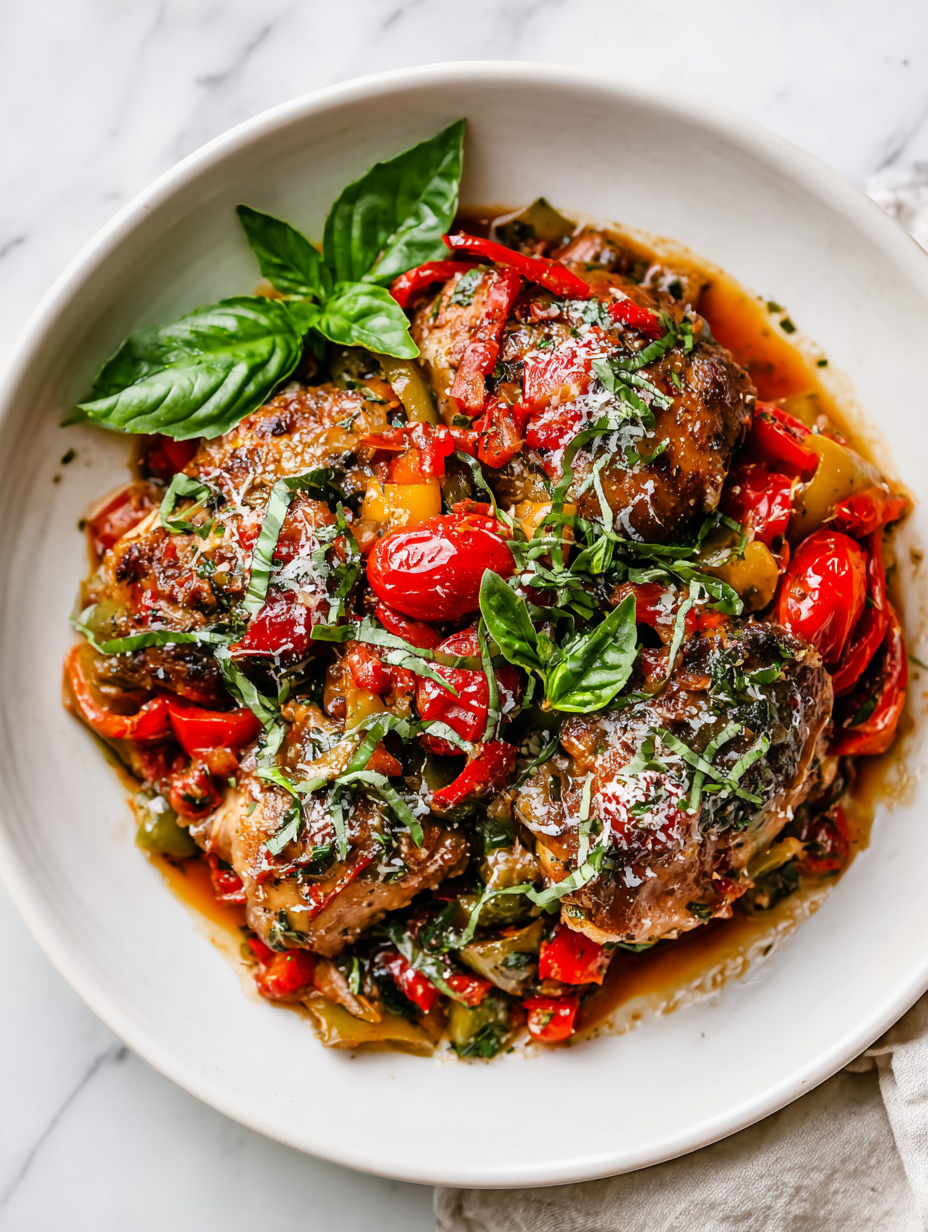
Crockpot Chicken Cacciatore
Ingredients
Equipment
Method
- Begin by searing the chicken thighs: heat olive oil in a skillet over medium-high heat until shimmering. Place the chicken thighs skin-side down and cook for about 5 minutes until golden brown. Flip and cook for another 3 minutes, then transfer them to the slow cooker.
- In the same skillet, add chopped onion and bell pepper. Sauté for 3-4 minutes until they soften and release a sweet aroma. Add minced garlic and cook for another minute, stirring frequently.
- Pour the crushed tomatoes into the skillet, scraping up any browned bits from the bottom. Let it simmer for 2-3 minutes until slightly thickened and fragrant.
- Transfer the tomato mixture to the slow cooker with the chicken. Add the olives, oregano, basil, and red pepper flakes. Gently stir to distribute the ingredients evenly.
- Set the slow cooker to low and cook for 6 hours. During this time, the chicken will become tender and pull away from the bone, while the sauce thickens and deepens in flavor.
- Once cooked, carefully remove the chicken thighs and place them on a serving platter. If desired, you can thicken the sauce further by simmering it uncovered for 10 minutes in the slow cooker or on the stove.
- Pour the rich, fragrant sauce over the chicken and garnish with freshly chopped herbs if available. Serve hot with crusty bread or pasta.
Notes
Pro tips for best results
- Sear the chicken skin-side down until golden—this creates a flavorful crust and seals in juices.
- Use fresh garlic and onions—they become sweet and fragrant, adding depth to the sauce.
- Layer ingredients—start with seared chicken, then sauté vegetables, to build flavors step-by-step.
- Keep an eye on the sauce as it simmers—if it splatters, turn down the heat to avoid messes.
- Let the dish rest uncovered for 10 minutes after cooking—this thickens the sauce and melds flavors.
- Taste and adjust seasoning at the end—sometimes a pinch of salt or herbs makes all the difference.
- If the sauce is too thin, remove the lid in the last 30 minutes to allow it to thicken naturally.
Common mistakes and how to fix them
- FORGOT to adjust heat → the sauce may burn; lower heat and stir more frequently.
- DUMPED all ingredients at once → layer ingredients for even cooking and flavor development.
- OVER-TORCHED the chicken → sear until golden, not burnt; keep an eye on the pan.
- USED too much salt → taste before adding salt; olives and canned tomatoes add saltiness naturally.
Quick fixes and pantry swaps
- When sauce looks thin, splash in a teaspoon of tomato paste to thicken and boost richness.
- If sauce is bitter, patch with a pinch of sugar and stir well to balance acidity.
- Splash a little water if the dish is too salty—shimmering and neutralizes excess saltiness.
- When chicken is over-torched, rescue by removing and deglazing the pan with broth before returning.
- Patch a broken sauce by whisking in a small spoonful of cornstarch slurry for glossy texture.
Prep, store, and reheat tips
- Prep the ingredients: chop vegetables and measure spices the night before—save time and keep your kitchen organized.
- Store cooked chicken in an airtight container for up to 3 days in the fridge; reheat until steaming and fragrant, about 2 minutes in the microwave.
- This dish’s flavors deepen after a day; the sauce becomes more concentrated, so expect a richer, slightly thicker stew after refrigeration.
- Freeze leftovers for up to 3 months in a freezer-safe container—thaw overnight in the fridge before reheating for best texture.
- Reheat gently on the stove over low heat, stirring occasionally, until hot and bubbling—smells of garlic and herbs should fill your kitchen again.
Top questions about Crockpot Chicken Cacciatore
1. Can I use boneless chicken thighs?
You can use boneless, skinless chicken thighs for quicker cooking, but expect a slightly less rich flavor and juiciness. Bone-in thighs add depth and flavor, which is why I prefer them in this recipe.

2. Can I use diced tomatoes instead of crushed?
Yes, you can substitute crushed canned tomatoes with diced ones, but you might want to mash them slightly to achieve a smoother sauce texture.
3. What kind of olives should I use?
Olives add a briny, slightly oily punch of flavor. Kalamata olives are my favorite, but green Castelvetrano olives work well if you want a milder taste.
4. Can I make it milder or spicier?
You can omit red pepper flakes if you prefer less heat, or add more if you like a spicy kick. Adjust to your taste during cooking.
5. How far ahead can I make this dish?
This dish can be prepared up to 24 hours in advance. Store it in the fridge and reheat gently until steaming hot, tasting to adjust seasoning if needed.

6. How should I reheat leftovers?
Reheat leftovers on the stove over low heat, stirring occasionally, until hot and fragrant. The sauce will thicken and deepen in flavor after refrigeration.
7. My sauce is too thin—what can I do?
If the sauce is too thin after cooking, remove the lid and cook on high for an additional 30 minutes to help it thicken naturally.
8. How do I know when the chicken is cooked?
Use a meat thermometer to check that chicken thighs reach an internal temperature of 75°C/165°F, ensuring they are fully cooked and safe to eat.
9. What if the sauce tastes bitter?
If you notice the sauce is too bitter, stir in a small pinch of sugar to balance the acidity and enhance the overall flavor.

10. Can I add wine or tomato paste?
For a richer flavor, add a splash of red wine or a teaspoon of tomato paste during cooking. Both deepen the sauce’s complexity.
This dish reminds me that sometimes, the simplest ingredients can create the most comforting flavors. The slow simmer brings out a rich, aromatic sauce that makes the whole kitchen smell like a cozy Italian trattoria.
In a busy week, knowing I can set this up in the morning and come home to a fragrant, hearty meal feels like a small victory. It’s a reminder that good, honest food doesn’t need to be complicated—just patience and a little time.

Hi, I’m Mason Harper, the voice and heart behind Rooting in Freshness. I’m so glad you’re here. This space was born from my love for seasonal ingredients, simple cooking, and the belief that food tastes better when it’s grown, chosen, and prepared with intention. Rooting in Freshness is more than a food blog to me. It is a reflection of how I live, cook, and connect with the world around me.






Leave a Reply