
Getting that crispy skin on salmon isn’t just about flavor; it’s about patience and precision. I used to rush the process, ending up with soggy, half-raw skin that made me frustrated. Now, I focus on controlling the heat and giving it time—those small adjustments make all the difference.
There’s something satisfying about hearing that initial crackle as the skin hits the hot pan, knowing I’ve set the stage for a perfect sear. Achieving that crispness elevates the whole dish and makes every bite feel special, even on a weeknight. It’s a simple technique, but honestly, it’s a game changer when you nail it.
Focusing on the importance of achieving the perfect crispy skin through precise pan temperature and patience, emphasizing how this small detail elevates the entire dish and transforms the eating experience.
The science behind perfect crispness
- Nailing that crispy skin felt like a small victory after many tries—such a simple pleasure that’s surprisingly elusive.
- Watching the skin turn golden and crackle makes me feel like I’ve got a secret weapon in my kitchen arsenal.
- There’s a nostalgic rush when I remember my first perfect sear—like I finally cracked a code I’d been chasing.
- Honestly, the joy of crisp skin is in the texture contrast—crunchy outside, tender inside—that keeps me coming back for more.
- Sometimes, I worry I’ll overdo it, but when it’s right, that rich, smoky aroma makes all the fuss worth it.
The story behind this recipe
- This recipe started from a moment of kitchen chaos—trying to sear salmon before my pan was hot enough, ending with soggy skin and a feeling of defeat. I realized that patience and controlling heat are what make or break that perfect, crispy exterior. It’s a simple shift, but it changed everything for me.
- One evening, I decided to really focus on that first crackle and the golden hue spreading across the skin. The smell of caramelized fat and the sight of that crackly surface made me realize I’d found a small joy worth chasing. Now, it’s become a little ritual—waiting, watching, and savoring each crispy piece.
- heading: ‘The story behind this recipe’
Trivia and historical notes
- Crispy skin on fish became a culinary hallmark in French cuisine during the 19th century, elevating simple dishes with texture contrast.
- The technique of searing fish skin to crispness likely originated from traditional Japanese methods of preparing fatty fish like salmon and mackerel.
- In Nordic countries, crispy skin salmon is a staple, historically enjoyed during festive gatherings and family dinners for its satisfying crunch and rich flavor.
- Achieving the perfect crispy skin requires a balance of heat and patience—an art passed down through generations of home cooks and chefs alike.
Ingredient breakdown
- Salmon fillets: I look for skin that’s dry and firm, almost velvety to the touch, which helps it crisp up beautifully. If your skin feels damp, pat it dry thoroughly—moisture is the enemy here.
- Salt: Generous salting of the skin before cooking is my secret to flavor and crispiness. If you prefer less salt, sprinkle lightly—just enough to draw out moisture and enhance the natural richness.
- Oil: I use a high-smoke-point oil like grapeseed or canola, which lets the skin crisp without burning. If you want a more neutral flavor, stick with these; olive oil can work but watch the temperature.
- Pan: A heavy stainless-steel or cast-iron skillet is my go-to. It retains heat evenly, giving the skin that perfect sear. Don’t skimp on quality here—your pan’s surface really matters.
- Lemon: Brightens the whole dish with a quick squeeze after cooking. If you love a citrus punch, add a little zest to the skin before searing for an extra layer of flavor.
- Herbs: Fresh thyme or dill can be added at the end for a fragrant finish. Just a sprig tossed into the pan in the last minute, if you like, for a subtle herbal aroma.
- Optional glaze: A quick brush of honey or soy during the last minute adds a sticky, smoky contrast—just be cautious with timing to prevent burning.
Spotlight on key ingredients
Salmon Skin:
- I look for dry, firm skin with a velvety feel, which crisps up beautifully. Moisture is the enemy—pat it dry thoroughly before cooking.
- Salt: Generous salting draws out moisture and enhances flavor. For less salt, sprinkle lightly, but don’t skip it; it’s essential for crispness.
Cooking Oil & Lemon:
- Oil: I prefer high-smoke-point oils like grapeseed or canola, which let the skin crisp without burning. They have a neutral flavor that lets the fish shine.
- Lemon: Brightens the dish with a quick squeeze after cooking. Adding zest before searing gives an extra citrusy punch and aromatic layer.
Notes for ingredient swaps
- Dairy-Free: Avocado oil instead of butter for crispness, which won’t add dairy but still offers a high smoke point and neutral flavor.
- Salt: Kosher salt for a cleaner, less bitter taste; sea salt flakes for added crunch and a more delicate finish.
- Oil: Grape seed or canola oil, as they handle high heat without burning and keep the skin crispy without adding flavor.
- Herbs: Fresh thyme or dill can be swapped with rosemary or parsley, depending on your flavor preference—just add at the end for aroma.
- Citrus: Lemon zest or lime for brightness; if out, a splash of white vinegar can provide a similar acidic punch to brighten the dish.
- Sweet glaze: Honey or maple syrup can replace soy or other glazes, adding sweetness and a sticky texture that enhances the skin’s crackle.
- Pan: A non-stick skillet is tempting but less ideal; stick with cast iron or stainless steel for an even sear and crispy finish.
Equipment & Tools
- Heavy skillet (stainless-steel or cast iron): Provides even heat and a perfect sear
- Tongs: Gently flip and handle the salmon
- Paper towels: Dry the salmon skin thoroughly
- Spatula: Assist in flipping if needed
Step-by-step guide to pan searing
- Equipment & Tools: Use a heavy stainless-steel or cast-iron skillet for even heat. Tongs for flipping, paper towels for drying, and a spatula for gentle handling.
- Pat the salmon skin completely dry with paper towels—moisture is the enemy of crispness. Season generously with salt on the skin side.
- Heat the skillet over medium-high heat (around 200°C / 390°F). Add a thin layer of high-smoke-point oil, swirling to coat.
- Place the salmon, skin side down, in the hot pan. Use tongs to gently press down for 10 seconds—ensure contact for even sear.
- Cook undisturbed for 4–5 minutes. You’ll hear a crackling sound and see the skin turn golden and crisp. Adjust heat if it smokes excessively.
- Step 5a: Flip the salmon carefully with tongs or a spatula. Cook the flesh side for 2–3 minutes until just opaque inside.
- Step 5b: If you prefer extra flavor, add herbs like thyme or a brush of honey in the last minute. Be cautious not to burn.
- Check for doneness—flesh should flake easily, and the skin should be crispy and golden. Use a probe to confirm internal temp around 50–52°C / 122–125°F for medium-rare.
- Rest & Plate: Remove salmon from pan, let rest for 2 minutes on a plate lined with paper towels to absorb excess oil. Serve immediately.
Let the salmon rest on a plate for 2 minutes. Finish with a squeeze of lemon or herbs if desired. Plate immediately to enjoy the crispy skin at its best.
How to Know It’s Done
- The skin is deep golden and crackling at the edges.
- The flesh is opaque and flakes easily with a gentle press.
- Internal temperature reaches around 50–52°C / 122–125°F for perfect doneness.
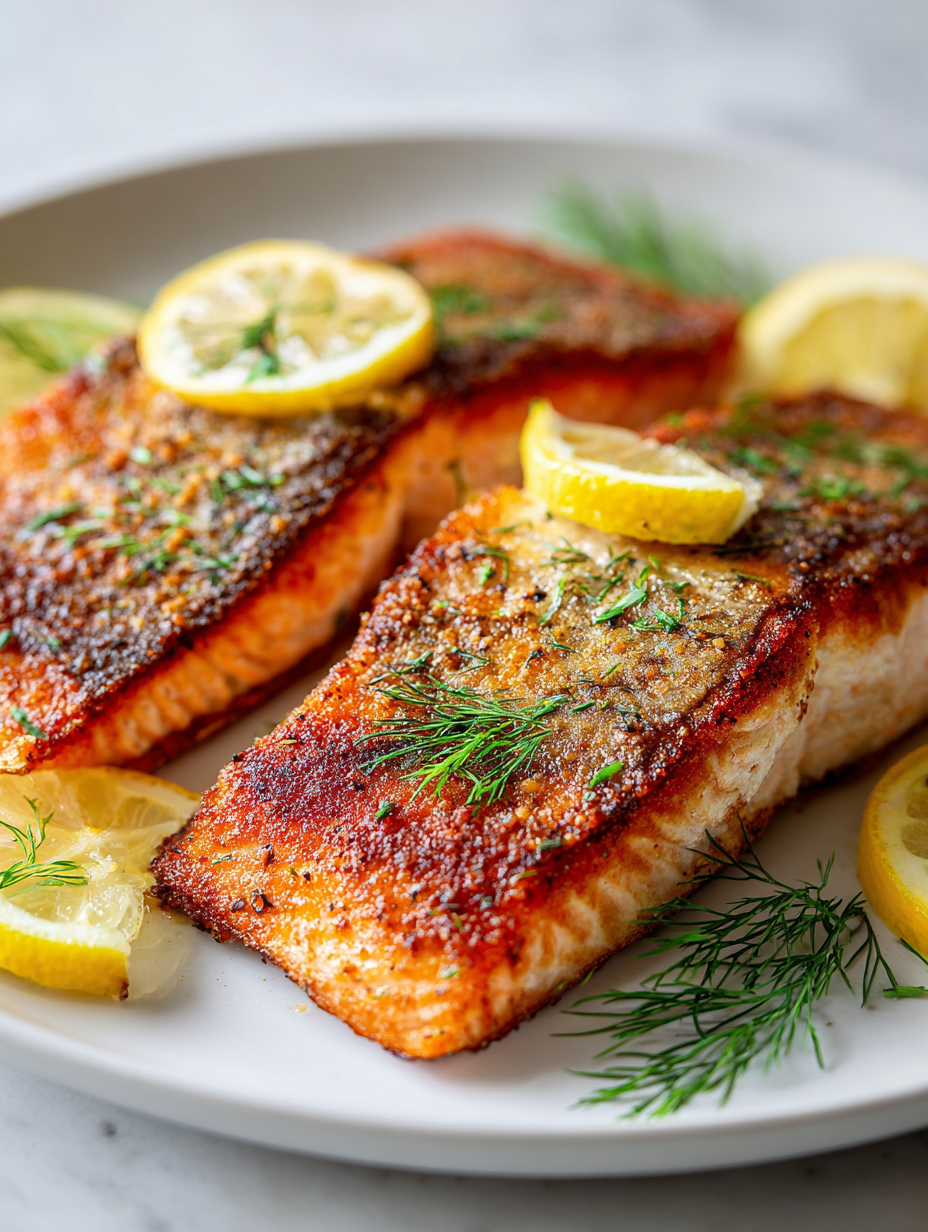
Crispy Skin Pan-Seared Salmon
Ingredients
Equipment
Method
- Pat the salmon fillets completely dry with paper towels, especially the skin, to remove any excess moisture. Sprinkle a generous layer of kosher salt on the skin side, which helps draw out moisture and promotes crispiness.
- Heat a heavy skillet over medium-high heat until hot—this should be around 200°C (390°F)—and add a tablespoon of high-smoke-point oil. Swirl the pan to coat the surface evenly and wait until the oil shimmers and just begins to smoke lightly.
- Gently place the salmon fillets skin-side down into the hot pan. Using tongs, press down lightly for about 10 seconds to ensure full contact and prevent curling. You should hear a satisfying crackle as the skin hits the hot oil.
- Cook the salmon undisturbed for 4 to 5 minutes. During this time, you’ll see the skin turn deep golden brown and crackle as it crisps up. The fish will also start to cook from the bottom, and the aroma of caramelized fat will fill the air.
- Use tongs or a spatula to carefully flip the salmon fillets over. Cook the flesh side for 2 to 3 minutes, just until the fish is opaque and flakes easily when pressed gently, indicating perfect doneness.
- If desired, add fresh herbs like thyme or dill to the pan during the last minute for fragrant flavor. Alternatively, brush lightly with honey or soy sauce for a sticky, smoky glaze—just be cautious not to burn.
- Remove the salmon from the pan and transfer it to a plate lined with paper towels to absorb excess oil. Let it rest for about 2 minutes to allow the juices to settle and the skin to firm up further.
- Squeeze fresh lemon juice over the fillets just before serving to brighten the flavors and enhance the natural richness of the salmon. Serve immediately to enjoy the crispy skin at its best.
Notes
Pro tips for perfect crispy skin
- Dry thoroughly: Pat the salmon skin completely dry before searing to ensure maximum crispness and prevent steaming.
- Preheat properly: Get your pan hot over medium-high heat (around 200°C / 390°F) before adding oil or fish.
- Gentle press: Use tongs or a spatula to press the fish down for the first 10 seconds, ensuring even contact and a crackling crust.
- Resist flipping early: Wait until the skin is deep golden and crackling before flipping—this can take 4–5 minutes—patience is key.
- Control the heat: If the skin starts to burn or smoke, reduce the heat slightly; a steady sizzle yields best results.
- Finish with resting: Let the salmon rest for 2 minutes off heat to allow juices to settle and skin to firm up further.
- Use minimal oil: Just enough to coat the pan; too much oil can cause sogginess, not crispness.
Common mistakes and how to fix them
- FORGOT to dry the skin thoroughly → Pat dry with paper towels for maximum crispness.
- DUMPED oil into the pan → Use just enough to coat the skin without excess pooling.
- OVER-TORCHED the oil → Keep heat moderate to prevent burning and smoke.
- UNDERRATED the importance of patience → Resist the urge to flip too early; wait for a deep golden crust.
Quick fixes and pantry swaps
- If skin isn’t crisping, splash a little more oil to increase heat conduction.
- When skin sticks, gently lift with a spatula and pat dry the surface again.
- Patch soggy skin with a quick blast of high heat—5 seconds can revive crispness.
- When overcooked, serve immediately with a squeeze of lemon to cut the dryness.
- Pan too cold? Swap to a hotter burner or increase heat gradually to shimmer for perfect sear.
Prep, store, and reheat tips
- Prep the salmon by patting it dry and salting the skin the night before—this enhances crispness and flavor.
- Store the prepared salmon, uncovered, in the fridge for up to 24 hours; the skin stays dry and ready to sear.
- Cooked salmon is best enjoyed immediately, but leftovers can be refrigerated for up to 2 days; reheat gently in a hot pan until crispy again, listening for that satisfying crackle.
- Refrigerated salmon will lose some crispness over time, so reheating should be done at high heat to restore texture and aroma, aiming for that initial smoky crackle.
Top questions about crispy skin salmon
1. How do I get the skin extra crispy?
Make sure the skin is completely dry before searing. Moisture causes steaming, not crisping, so pat it with paper towels and let it air-dry if needed.
2. How long should I cook the skin side?
Use a hot pan with just enough oil to coat the surface. Place the salmon skin-side down and resist flipping until it’s deep golden and crackling, about 4-5 minutes.
3. When is the right time to flip?
Don’t rush to flip the fish. Wait until you see a deep golden crust and hear a crackling sound—this ensures maximum crispness and prevents tearing.
4. What if the skin burns?
Adjust the heat if the skin starts to burn or smoke excessively. Medium-high heat is ideal; you want a steady sizzle, not a flare-up.
5. My skin sticks to the pan, what now?
Flip the salmon gently with tongs or a spatula. If it sticks, give it an extra minute or so and try again—proper patience helps release the skin naturally.
6. How do I know when the salmon is done?
Use a probe thermometer to check for an internal temperature of around 50–52°C (122–125°F) for medium-rare, which keeps the flesh tender and the skin crispy.
7. Should I rest the salmon after cooking?
Let the cooked salmon rest for a couple of minutes off heat. This helps juices settle and keeps the skin crispy when served.
8. How can I fix soggy skin after cooking?
If the skin isn’t crisp enough, increase the heat slightly or add a tiny splash of oil just before searing. A quick blast at the end can revive crispness.
9. Can I use a non-stick pan?
For best results, use a heavy skillet like cast iron or stainless steel. These materials retain heat evenly and produce a better sear than non-stick pans.

10. How do I reheat crispy salmon without losing crispness?
Reheat leftovers in a hot pan for a minute or two, pressing gently to re-crackle that crispy skin. Avoid microwaving if you want to keep the texture.
Achieving that perfect crispy skin isn’t just a technique; it’s a small act of patience that elevates the entire meal. When you hear that crackle and see the golden surface, it’s a reminder that good things often come from gentle persistence.
This dish feels like a quiet victory—simple, straightforward, but deeply satisfying. It’s a reminder that sometimes, the smallest details make the biggest difference, especially in the kitchen. And honestly, that crispy skin keeps bringing me back, bite after bite.

Hi, I’m Mason Harper, the voice and heart behind Rooting in Freshness. I’m so glad you’re here. This space was born from my love for seasonal ingredients, simple cooking, and the belief that food tastes better when it’s grown, chosen, and prepared with intention. Rooting in Freshness is more than a food blog to me. It is a reflection of how I live, cook, and connect with the world around me.



Leave a Reply