
Eggplant Parmesan is one of those dishes that feels like a warm hug after a long day. It’s forgiving, adaptable, and forgiving — perfect for busy weeknights when you want something hearty but don’t want to fuss over complicated techniques. I’ve come to love how you can use pantry staples, a few fresh ingredients, and still end up with something cozy and satisfying.
What I appreciate most is how forgiving this dish is. If your eggplants aren’t perfect or if you’re missing a fancy cheese, you can tweak along the way without losing that comforting vibe. It’s a dish that welcomes improvisation, making it ideal for those nights when you just want to get dinner on the table without stress.
Focusing on how eggplant Parmesan can be a forgiving, adaptable dish for busy weeknights, emphasizing simple techniques and pantry staples to achieve comfort in every bite.
The comfort of forgiving flavors
- Eggplant Parmesan has become my go-to comfort food, especially on cold evenings when I crave something hearty and familiar.
- I love how forgiving this dish is—if I forget to salt the eggplant or overbake the cheese, it still comes out deliciously satisfying.
- There’s a nostalgic charm in layering crispy eggplant with tangy tomato sauce — it takes me right back to family dinners.
- The joy of making this dish is in its simplicity; it’s a reminder that good food doesn’t need to be complicated or fancy.
- Every time I prepare it, I feel a little pride in turning humble ingredients into something truly comforting.
The story behind this recipe
- Growing up, my grandmother’s kitchen was filled with the smell of frying eggplant and bubbling cheese. I remember sneaking bites straight from the pan, the crispy edges and gooey cheese mixing in a perfect chaos. That dish was never fancy, just honest and forgiving, and it stuck with me.
- One rainy weekend, I decided to try making my own version, using what I had — a little extra mozzarella, a splash of basil, and a pinch of patience. It turned out to be one of those dishes that feels like a warm, messy hug after a busy day, reminding me of home and simplicity.
- heading: ‘The nostalgic pull of eggplant’
Eggplant Parmesan Trivia
- Eggplant Parmesan, or Melanzane alla Parmigiana, is believed to have roots in Southern Italy, especially Naples, dating back to the 19th century.
- The dish reflects a blend of Mediterranean influences, combining fried eggplant, tomato sauce, and cheese—a hearty, humble peasant dish elevated over time.
- In some regions, the eggplant is baked instead of fried, showcasing local preferences for lighter, less greasy versions.
- Traditionally, fresh basil and mozzarella are key, but regional variations include adding ricotta or using different cheeses altogether.
- This dish has become a symbol of Italian comfort food worldwide, with countless family recipes passed down through generations.
Ingredient breakdown: key components
- Eggplant: I prefer plump, shiny ones with no soft spots. Their slightly smoky aroma when roasting is irresistible; skip the bitter ones, or they’ll drag down the flavor.
- Bread crumbs: Use panko for extra crunch, but seasoned ones save a step. Adding a pinch of garlic powder gives that savory boost I love in every bite.
- Tomato sauce: I opt for homemade when I have time, but a good-quality jarred sauce with bright, tangy notes works wonders—look for one with a hint of basil or oregano.
- Cheese: Mozzarella is classic, but I often mix in a little Parmesan for sharpness and a splash of ricotta for creaminess. The gooey stretch is what I chase after.
- Herbs: Fresh basil is perfect, but dried basil and oregano are fine in a pinch. I love adding a touch of thyme for an earthy undertone that sneaks in during baking.
- Olive oil: A drizzle of good extra-virgin before roasting gives the eggplant a smoky richness, but if you want a lighter version, skip it; the dish still shines.
- Eggs: I lightly beat mine to help the breading stick better, especially if I want a thicker crust. If your eggplant is already coated well, you can skip this step for a quicker prep.
Spotlight on key ingredients
Eggplant:
- I look for shiny, firm ones with no soft spots. When roasting, their smoky aroma fills the kitchen, hinting at richness. Skip the bitter ones to keep the dish smooth.
- Cheese: Mozzarella’s meltiness makes every bite gooey, but mixing in Parmesan adds a sharp punch. The stretchiness depends on proper melting, so don’t rush the bake.
Breadcrumbs:
- Tomato Sauce: I prefer thick, bright, and tangy sauce, whether homemade or good store-bought. The smell of garlic and basil in it makes the whole dish inviting. It should cling to the layers without pooling.
- Panko gives a crisp exterior, but seasoned ones save a step. When frying, the crunch should crackle and turn golden—if they brown too fast, lower the heat.
Notes for ingredient swaps
- Dairy-Free: Use a plant-based cheese or omit cheese altogether. It won’t be as gooey but still satisfying.
- Gluten-Free: Swap regular bread crumbs for almond flour or crushed gluten-free crackers. Expect a different crunch, but still tasty.
- Vegan: Replace cheese with a cashew or tofu-based alternative. It will melt differently but adds creaminess.
- Low-Sodium: Use low-sodium cheese and tomato sauce. The dish will still be flavorful with herbs and spices.
- Extra-Virgin Olive Oil: Use a neutral oil if you prefer less pronounced olive flavor; the dish remains rich but less smoky.
- Eggplant: Try zucchini or roasted sweet potatoes for a different texture and flavor; they hold up well in layers.
- Breadcrumbs: Use crushed cornflakes or crushed pita chips for added crunch and a flavor twist.
Equipment & Tools
- Large shallow baking dish: To layer and bake the assembled eggplant Parmesan.
- Frying pan: To fry the breaded eggplant slices until crispy.
- Cooling rack: To drain excess oil from fried eggplant slices.
- Mixing bowls: To prepare eggs and breading station.
- Spatula and tongs: For turning slices and assembling layers.
- Oven: To bake the assembled dish until bubbly and golden.
Step-by-step guide to Eggplant Parmesan
- Equip a large shallow baking dish, a frying pan, and a cooling rack. These keep the process smooth and organized.
- Preheat your oven to 200°C (390°F). Slice the eggplant into 1 cm (0.4 inch) rounds. Salt them generously and set aside for 20 minutes to draw out bitterness.
- While waiting, prepare your breading station: beat 2 eggs in a shallow bowl, and spread seasoned panko breadcrumbs on a plate—add garlic powder and Italian herbs for flavor.
- Pat eggplant slices dry with a towel. Dip each slice into the beaten eggs, then coat thoroughly in breadcrumbs. For a thicker crust, double dip.
- Heat 2-3 tablespoons olive oil in the frying pan over medium heat (about 160°C/320°F). Fry eggplant slices for 2-3 minutes per side until golden and crispy. They should crackle gently and turn a rich amber.
- Transfer fried eggplant onto the cooling rack to drain excess oil. Repeat until all slices are fried. If oil smokes or slices burn, lower the heat and adjust timing.
- In a baking dish, spread a layer of tomato sauce. Layer fried eggplant slices over the sauce, then top with shredded mozzarella and a sprinkle of Parmesan. Repeat layers as needed.
- Finish with a generous layer of cheese on top. Bake in the preheated oven for 20-25 minutes, until bubbling and golden brown on top. The cheese should be oozy and slightly browned.
- Remove from oven and let rest for 10 minutes. Resting allows flavors to settle and cheese to set slightly, making slicing easier. Garnish with fresh basil before serving.
- Slice and serve hot, with a side of crusty bread or a simple green salad. The aroma of baked cheese and tomato should fill your kitchen, inviting everyone to dig in.
Let the baked eggplant Parmesan rest for about 10 minutes to allow the cheese to set and flavors to meld. Slice using a sharp knife, serve with fresh basil or a drizzle of olive oil, and enjoy while hot and gooey.
How to Know It’s Done
- Eggplant slices are crispy and golden on the edges.
- Cheese is melted and bubbling with a lightly browned top.
- Tomato sauce is thick and coats the layers without pooling.
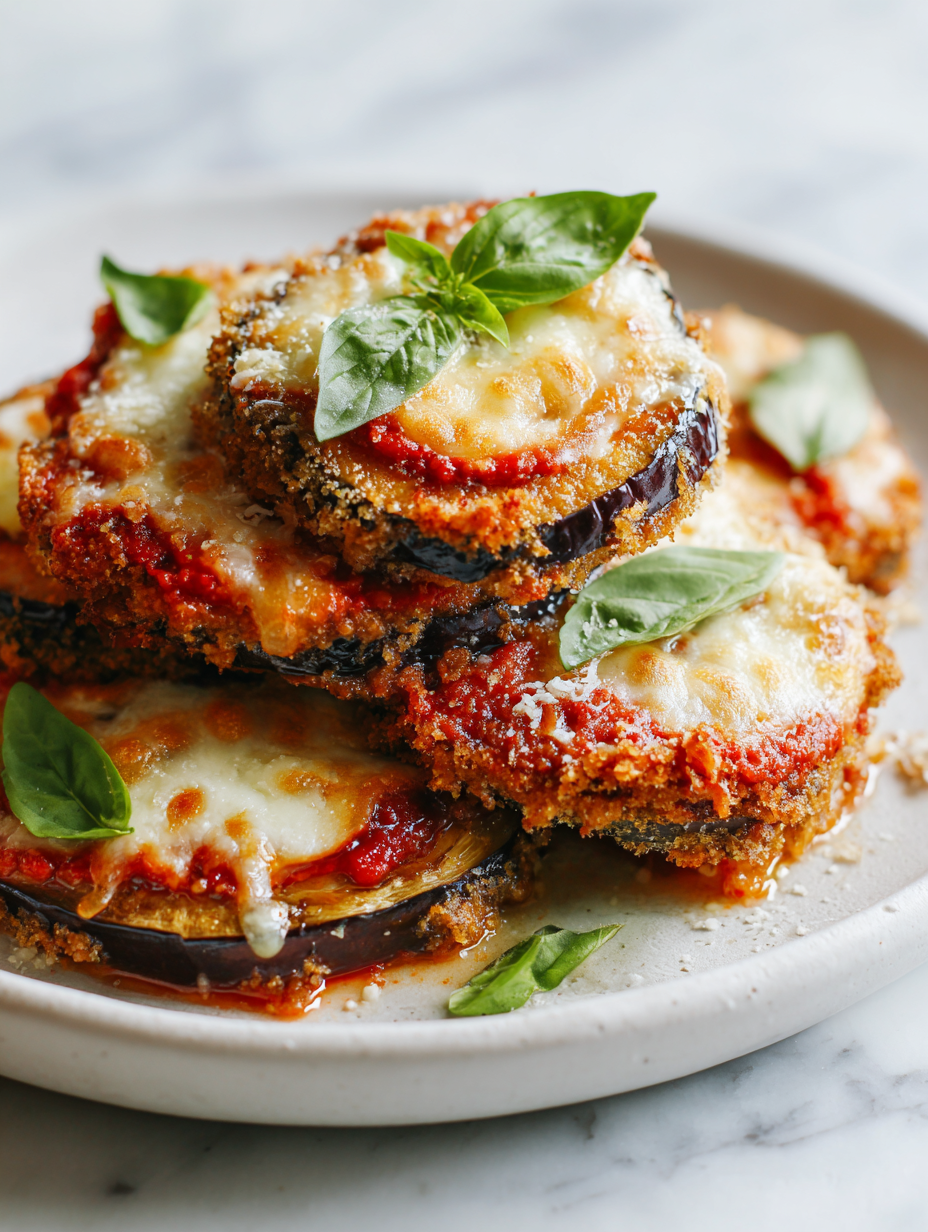
Eggplant Parmesan
Ingredients
Equipment
Method
- Slice the eggplants into 1 cm (0.4 inch) rounds, then sprinkle generously with salt and set aside for 20 minutes to draw out excess moisture and bitterness.
- While waiting, prepare your breading station: beat the eggs in a shallow bowl, and spread seasoned panko breadcrumbs on a plate, adding dried herbs for extra flavor.
- Pat the salted eggplant slices dry with a towel to remove excess moisture, then dip each slice into the beaten eggs, letting the excess drip off.
- Coat the eggplant slices thoroughly in the seasoned panko breadcrumbs, pressing gently to ensure they stick well.
- Heat 2-3 tablespoons of olive oil in a frying pan over medium heat until shimmering and fragrant. Fry the breaded eggplant slices in batches for about 2-3 minutes per side, until golden brown and crispy, listening for a gentle crackle.
- Transfer the fried eggplant slices onto a cooling rack to drain excess oil. Repeat with remaining slices, adjusting heat as needed to prevent burning.
- Spread a thin layer of tomato sauce over the bottom of your baking dish, then layer crispy eggplant slices on top, covering the sauce evenly.
- Sprinkle a generous handful of shredded mozzarella over the eggplant layer, then add a sprinkle of Parmesan cheese and a pinch of dried oregano and basil.
- Repeat the layering process—adding sauce, eggplant, and cheese—until all ingredients are used, finishing with a final layer of cheese on top.
- Preheat your oven to 180°C (350°F). Bake the assembled dish for 20-25 minutes, until bubbling and the cheese is melted and golden brown.
- Remove from the oven and let rest for 10 minutes to allow the cheese to set. Garnish with fresh basil if desired, then slice and serve hot, enjoying the crispy edges and gooey center.
Pro Tips for Eggplant Parmesan
- BREADING TECHNIQUE: Use panko breadcrumbs for maximum crunch, and double dip for a thicker crust that stays crisp.
- FRYING TEMPERATURE: Keep the oil at about 160°C (320°F); if it smokes, lower the heat to prevent burning the breading.
- EGGPLANT PREP: Salting slices and letting them sit for 20 minutes draws out moisture and bitterness, ensuring a better texture.
- CHEESE MELTING: Use shredded mozzarella and sprinkle generously on top; bake until bubbly and just starting to brown for perfect gooeyness.
- RESTING TIME: Let the baked dish sit for 10 minutes before slicing; it helps the cheese set and makes serving cleaner.
- OIL DRAINAGE: Place fried eggplant on a cooling rack to drain excess oil—this keeps the layers crispy and not greasy.
- LAYERING STRATEGY: Spread sauce evenly, but don’t oversaturate; a thin, even layer prevents sogginess and keeps the dish balanced.
Common Eggplant Parmesan Mistakes
- FORGOT to dry eggplant slices before breading → Pat dry to prevent sogginess.
- DUMPED too much oil in frying → Use just enough to coat the pan lightly.
- OVER-TORCHED the cheese → Remove from oven once bubbling and lightly browned.
- MISSED the resting time → Let the dish rest 10 minutes for better slicing and flavor melding.
Quick Fixes and Pantry Swaps
- When oil smokes, splash in a little water to cool and reduce odor.
- If breading falls off, pat the eggplant dry and double-dip for better adhesion.
- DUMPED too much oil in frying? Use paper towels to absorb excess after frying.
- When cheese over-browns, cover loosely with foil and continue baking for even melting.
- Splash a bit of lemon juice on the finished dish to brighten flavors if it tastes flat.
Prep, store, and reheat tips
- Prepare the tomato sauce and fry the eggplant slices up to a day in advance; keep in airtight containers in the fridge. The flavors deepen overnight, making assembly quicker.
- Assemble the layered dish a few hours before baking, cover tightly with foil, and refrigerate. The eggplant absorbs the sauce, and the flavors meld beautifully overnight.
- Refrigerated eggplant Parmesan is best eaten within 2-3 days. Reheat in the oven at 180°C (350°F) until bubbling—about 20 minutes—until cheese is oozy and edges crisp again.
- For freezer storage, wrap tightly in foil or place in an airtight container. It keeps well for up to 2 months. Thaw overnight in the fridge, then reheat as above. Expect a slightly softer texture after freezing, but still flavorful.
Top questions about Eggplant Parmesan
1. How do I pick the best eggplant?
Use firm, shiny eggplants with no soft spots. The smoky aroma when roasting signals they’re ready, and avoiding bitter ones ensures a smooth dish.

2. Can I use store-bought tomato sauce?
A good-quality jarred tomato sauce with bright, tangy flavor can replace homemade. Look for ones with basil or oregano for extra depth.
3. What breadcrumbs are best for frying?
Use panko breadcrumbs for crunch, seasoned ones for flavor. When frying, keep oil at about 160°C (320°F)—if it smokes, lower the heat.
4. Should I salt the eggplant first?
Salting eggplant slices and letting sit for 20 minutes draws out moisture and bitterness, leading to a better texture and flavor.
5. How do I know when it’s done?
Bake until bubbling and cheese is just starting to brown, about 20-25 minutes at 180°C (350°F). Rest for 10 minutes before slicing.
6. Can I make it dairy-free?
Replace cheese with vegan or dairy-free options like cashew cheese or plant-based slices. Expect different melting and texture, but still tasty.
7. How do I store leftovers?
Freeze assembled dish in airtight container up to 2 months. Thaw overnight, then bake at 180°C (350°F) until bubbly and cheese is gooey.
8. What if the cheese gets too dark?
If the cheese over-browns, cover loosely with foil during baking. For burnt breadcrumbs, sprinkle fresh herbs or a drizzle of oil to refresh flavor.
9. How should I serve it?
Use a sharp knife for neat slices, and let the dish rest for 10 minutes after baking to help cheese set and flavors meld.

10. How do I reheat leftovers?
If the eggplant slices are soggy, pat them dry before layering. To reheat, warm in the oven until bubbling and cheese is gooey, about 20 minutes at 180°C (350°F).
Eggplant Parmesan may seem like a simple comfort dish, but its layers of smoky, cheesy goodness carry a quiet resilience. It’s a reminder that even humble ingredients can create something deeply satisfying, especially when made with care and patience. In times when a cozy, forgiving meal feels just right, this dish offers both nourishment and a touch of nostalgic warmth.
There’s an honesty in its messy, cheesy layers that makes every bite feel like a small victory. It’s not about perfection, but about the simple joy of turning everyday ingredients into something memorable—something worth sharing, even in the quiet moments.

Hi, I’m Mason Harper, the voice and heart behind Rooting in Freshness. I’m so glad you’re here. This space was born from my love for seasonal ingredients, simple cooking, and the belief that food tastes better when it’s grown, chosen, and prepared with intention. Rooting in Freshness is more than a food blog to me. It is a reflection of how I live, cook, and connect with the world around me.



Leave a Reply