
There’s something almost meditative about slow braising lamb shanks in red wine. It’s a dish that demands patience, but rewards you with meat so tender it practically melts on the fork, infused with a deep, winey richness that lingers. I love the way the kitchen fills with the scent of garlic, herbs, and that oaky, slightly smoky aroma of wine reducing into a glossy sauce.
This recipe isn’t about rushing—it’s about embracing that quiet moment of anticipation as the flavors develop. It’s perfect for a cozy weekend dinner when you want something hearty yet refined, a dish that feels like a small celebration of simple ingredients turned extraordinary by slow, gentle cooking.
The process of transforming tough, sinewy meat into something so tender and flavorful feels almost magical. Every time I make these lamb shanks, I’m reminded that patience in the kitchen can turn humble ingredients into something truly special. And nothing beats the ritual of simmering the wine and broth together, watching the sauce thicken and darken, promising richness with each passing minute.
Focusing on how slow braising lamb shanks in red wine transforms tough meat into meltingly tender bites, this recipe celebrates patience and the magic of simmered flavors, emphasizing the comforting ritual of turning simple ingredients into a rich, soulful dish.
A Slow-Braised Love
- Cooking these shanks feels like a slow, soulful ritual I look forward to all week.
- There’s a quiet pride in seeing that tough meat turn silky and falling apart after hours of patience.
- The aroma of red wine, garlic, and herbs bubbling together always sparks a nostalgic warmth in me.
- Nothing beats the joy of spooning that thick, glossy sauce over tender meat and watching it melt in your mouth.
The story behind this recipe
- Making these lamb shanks always takes me back to my grandmother’s kitchen. She’d simmer her own version with a splash of red wine and a handful of herbs, the kind of dish that fills the house with warmth and stories. I’ve always loved how the slow cooking turns tough meat into something so tender, it practically falls apart just by looking at it.
- This recipe isn’t about quick fixes. It’s about carving out time to let flavors deepen and develop their full character. Whenever I’m feeling a little overwhelmed, I make this—something about the slow, gentle braise helps me breathe and reminds me that good things come with patience.
- heading: The story behind this recipe
Historical & Cultural Tidbits
- Lamb shanks have been a hearty staple in Mediterranean cooking for centuries, appreciated for their rich flavor and economical cut.
- Red wine braising originates from French and Italian traditions, where slow-cooked meats absorb the wine’s deep, fruity notes.
- The technique of slow braising tough cuts to tenderness was historically a way to make less expensive meat taste luxurious.
- In medieval Europe, slow-cooked game meats often featured wine and herbs, a practice that influenced modern recipes like this one.
Ingredient breakdown: key components
- Lamb shanks: I love the rich, gamey aroma when they start browning; you can skip the fat but it adds depth.
- Red wine: Use a decent, fruity wine—nothing too sweet or too tannic—to balance the savory; that aroma of simmering wine is key.
- Garlic: Fresh cloves crushed release a pungent, sweet aroma that deeply infuses the sauce; avoid pre-minced for more punch.
- Herbs: Rosemary and thyme are staples, but a sprig of bay leaf adds a subtle, earthy note that lingers on the palate.
- Onions: They melt down into the sauce, becoming sweet and silky; caramelize thoroughly for a richer flavor.
- Broth: Beef or vegetable broth works, but homemade or low-sodium store-bought keeps the sauce balanced and vibrant.
- Olive oil: Use good quality, extra virgin—its fruity aroma will enhance the initial sear and deepen the sauce.
Spotlight on Key Ingredients
Lamb shanks:
- I love the rich, gamey aroma when they start browning; you can skip the fat but it adds depth.
- Red wine: Use a decent, fruity wine—nothing too sweet or too tannic—to balance the savory; that aroma of simmering wine is key.
- Garlic: Fresh cloves crushed release a pungent, sweet aroma that deeply infuses the sauce; avoid pre-minced for more punch.
Red wine:
- Its deep, fruity scent while simmering brings a warm complexity to the dish; choose a wine you’d drink.
- Herbs: Sprigs of rosemary and thyme release aromatic oils that intensify during braising, adding earthy notes to the sauce.
- Onions: When caramelized, they turn sweet and silky, blending seamlessly into the richness of the wine sauce.
Notes for ingredient swaps
- Lamb shanks: Swap for beef short ribs if you’re after a similar richness, but expect a slightly different flavor profile and a tad more chew.
- Red wine: Use a dry Marsala or sherry for a slightly sweeter, nuttier twist—just keep in mind it alters the traditional winey depth.
- Herbs: Fresh rosemary and thyme can be replaced with dried versions—use about half the amount, but fresh really punch up the aroma.
- Broth: Chicken broth works in a pinch if beef or vegetable isn’t available; it’s milder but still keeps the sauce flavorful.
- Onions: Shallots or leeks add a gentler sweetness—slice thin and cook until translucent, they’ll soften the sauce nicely.
- Olive oil: Avocado oil is a good high-heat alternative, with a neutral flavor that won’t overpower the dish.
- Garlic: Roasted garlic can add a sweeter, milder note—use less, as it’s more pungent when raw.
Equipment & Tools
- Dutch oven or deep ovenproof skillet: To sear, braise, and cook the lamb evenly in the oven.
- Tongs: To turn and handle the hot meat safely.
- Sharp knife: To season and prepare vegetables and meat.
- Wooden spoon: To scrape flavorful bits from the pan and stir ingredients.
- Measuring cups: To measure wine and broth accurately.
- Fine-mesh sieve: To strain the sauce for a silky finish.
Step-by-step guide to braising lamb shanks
- Equipment ready: heavy Dutch oven or deep ovenproof skillet, tongs, sharp knife, wooden spoon, measuring cups, and a fine-mesh sieve. Preheat oven to 160°C (320°F).
- Pat the lamb shanks dry with paper towels—this helps achieve a good sear. Season generously with salt and pepper.
- Heat a few tablespoons of olive oil in the Dutch oven over medium-high heat until shimmering. Sear the shanks in batches, about 4-5 minutes per side, until deeply browned. Remove and set aside.
- Reduce heat to medium. In the same pot, add chopped onions and carrots. Cook until softened and caramelized, about 8 minutes. Stir frequently and scrape up browned bits.
- Add crushed garlic and cook for 1 minute until fragrant. Pour in red wine (about 1 cup), scraping the bottom to deglaze. Bring to a gentle simmer, let alcohol cook off, about 5 minutes, until slightly reduced.
- Return lamb shanks to the pot. Add sprigs of rosemary and thyme, plus enough beef or vegetable broth to almost cover the meat. Bring to a simmer.
- Cover the pot with a tight-fitting lid or foil. Transfer to the oven. Braise for 2.5 to 3 hours, or until meat is fall-apart tender and bones slide out easily.
- Check occasionally—if liquid reduces too much, add a splash more broth. The sauce should be rich and glossy when done.
- Once cooked, carefully remove shanks and set on a warm plate. Strain the sauce through a sieve into a saucepan, pressing gently to extract all flavors. Reduce over medium heat for 10-15 minutes until thickened.
- Finish with a pinch of salt, a splash of good wine if needed, and a drizzle of olive oil. Serve shanks topped with the sauce, garnished with fresh herbs.
Let the lamb shanks rest for 5 minutes on a plate, tented loosely with foil. Spoon the sauce over the meat and garnish with fresh herbs before serving.
How to Know It’s Done
- Meat easily falls off the bone and feels very tender to a fork test.
- Sauce is glossy, deep in color, and coats the back of a spoon.
- Interior temperature of lamb shank meat reaches at least 90°C (194°F) when checked with a probe.
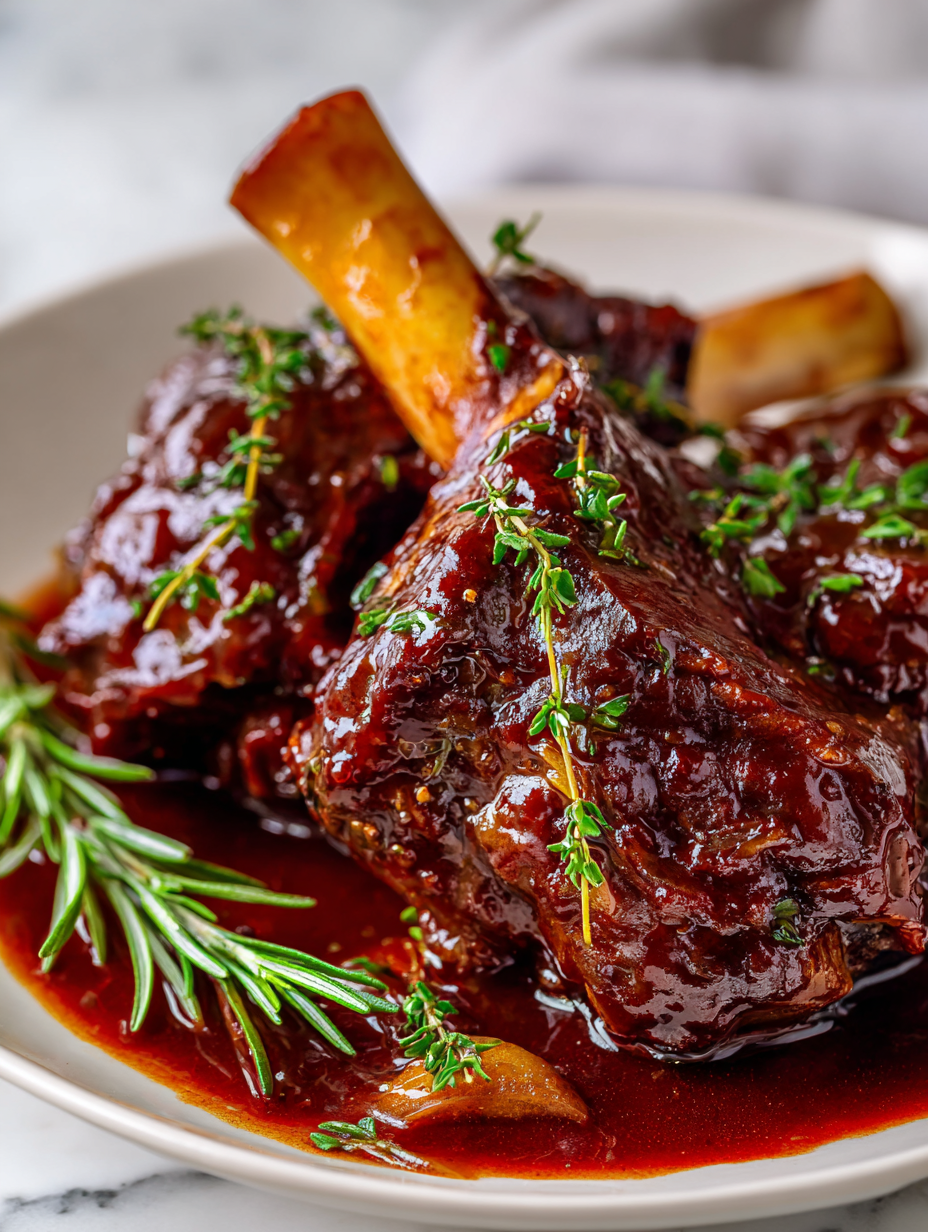
Slow Braised Lamb Shanks in Red Wine
Ingredients
Equipment
Method
- Preheat your oven to 160°C (320°F). Pat the lamb shanks dry with paper towels and season generously with salt and pepper.
- Heat olive oil in a heavy Dutch oven over medium-high heat until shimmering. Carefully place the shanks in the hot oil and sear each side for about 4-5 minutes until deeply golden and caramelized. Remove the shanks and set aside.
- Add chopped onions and carrots to the same pot. Cook, stirring frequently, until the vegetables soften and develop a rich, caramel color—about 8 minutes. The kitchen should fill with a sweet, savory aroma.
- Add crushed garlic and cook for another minute until fragrant, stirring constantly. Pour in the red wine, scraping up the browned bits from the bottom of the pot to deglaze. Bring the mixture to a gentle simmer and cook until the wine reduces slightly—about 5 minutes.
- Return the seared lamb shanks to the pot, nestling them among the vegetables. Add sprigs of rosemary and thyme, along with the bay leaf. Pour in enough broth to nearly cover the meat.
- Cover the Dutch oven tightly with a lid or foil and transfer it to the preheated oven. Let it braise slowly for about 2.5 to 3 hours, until the meat is very tender and easily pulls away from the bone. During cooking, the sauce will thicken and deepen in color.
- Once cooked, carefully remove the shanks from the sauce and set aside to rest briefly. Strain the sauce through a fine-mesh sieve into a saucepan, pressing gently to extract all the flavorful liquids. Simmer over medium heat until the sauce is glossy and thickened—about 10-15 minutes.
- Taste the sauce and adjust seasoning as needed with a pinch of salt or a splash of wine. Spoon the thickened sauce over the lamb shanks, garnish with fresh herbs if desired, and serve immediately for a tender, flavorful experience.
Pro tips for perfect lamb shanks
- BOLD THE SEAR: Achieve a deep, caramelized crust by letting the lamb shanks sit undisturbed in hot oil for a few minutes per side.
- DEGLAZE WELL: Pour in the wine while the pan is still hot, scraping up all those browned bits—those are flavor bombs.
- LOW AND SLOW: Keep the oven steady at 160°C (320°F); patience here ensures fall-apart tenderness without drying out.
- SKIM THE FAT: After braising, let the sauce cool slightly and skim off excess fat for a glossy, balanced finish.
- REDUCE FOR RICHNESS: Simmer the sauce uncovered until it thickens just enough to cling to the meat—about 10-15 minutes.
- REST THE MEAT: Let the shanks rest for 5 minutes after removing from oven, so juices redistribute and stay put when sliced.
- TASTE AND ADJUST: Finish with a splash of wine or a pinch of salt right before serving—flavor should be bold and balanced.
Common mistakes and how to fix them
- FORGOT to deglaze properly → Scrape up browned bits for richer flavor.
- DUMPED in cold liquid → Warm the wine and broth before adding for even cooking.
- OVER-TORCHED the sauce → Reduce heat immediately; stir constantly to prevent burning.
- SKIPPED the resting step → Rest meat for 5 minutes to retain juices and improve texture.
Quick fixes and pantry swaps
- WHEN sauce shimmers with a shimmer, it’s ready to strain and reduce further.
- Splash a splash of cold water if sauce is overly thick and gloopy—stirs in moisture quickly.
- Patch a cracked or broken lamb shank by tucking in extra herbs or spooning sauce over, hiding imperfections.
- DUMPED in too much fat? Chill and skim off the hardened layer for a cleaner, silkier sauce.
- SHIELD the sauce from overcooking by lowering heat immediately if it begins to darken or crackle.
Prep, store, and reheat tips
- You can prep the lamb shanks and vegetables a day ahead; keep them refrigerated in airtight containers for up to 24 hours, which helps deepen flavors as they sit.
- The sauce can be made a day early, then cooled and stored in the fridge for up to 2 days. Reheat gently on the stove, stirring occasionally, until warmed and slightly thickened.
- Reheating the dish in the oven at 160°C (320°F) covered for about 20 minutes restores tenderness and melds flavors. Check for bubbling and a rich aroma before serving.
- The flavors tend to intensify overnight, so taste and adjust salt or seasoning after reheating to balance the richness and keep the sauce vibrant.
Top questions about lamb shanks with red wine sauce
1. How do I get a good sear on the lamb shanks?
Sear the shanks until they develop a deep, golden-brown crust—this locks in flavor and adds richness to the sauce.
2. Can I use any red wine for cooking?
Use a good quality, fruity red wine like Merlot or Côtes du Rhône for a balanced, aromatic sauce.
3. How long should I braise the lamb shanks?
Braise the shanks slowly at 160°C (320°F) for about 2.5 to 3 hours, until the meat is fall-apart tender.
4. How do I thicken the red wine sauce?
Strain the sauce through a fine sieve to remove vegetables and herbs, then simmer until it’s glossy and thickened.
5. Should I rest the lamb after cooking?
Allow the cooked lamb shanks to rest for 5 minutes, tented with foil, to keep the juices locked in.
6. Can I prepare this dish in advance?
You can make the sauce a day ahead and reheat gently, which actually deepens the flavor.
7. What if the sauce becomes too thick?
If the sauce reduces too much while simmering, just add a splash of broth or water to loosen it up.
8. Can I substitute dried herbs for fresh?
Use fresh garlic and herbs whenever possible; they release vibrant aromas that dried versions can’t match.
9. How do I prevent the sauce from burning or over-reducing?
Keep an eye on the braising liquid; if it’s bubbling too vigorously, lower the oven temperature slightly.
10. How do I know when the lamb is perfectly cooked?
The dish is done when the meat is very tender, the sauce is glossy and coats the back of a spoon, and the bones slide out easily.
This dish is a reminder that good things take time, especially when it comes to tender, flavorful meat. The rich aroma of wine and herbs filling the kitchen makes every minute of waiting worth it. Once plated, the sauce’s glossy sheen and the melt-in-your-mouth shanks make the slow effort feel like a small victory.
It’s a piece of comfort that feels especially fitting for cooler evenings or when you need something soulful and unpretentious. No matter how many times I make it, the magic of transforming tough cuts into something so tender and flavorful never gets old. It’s a meal that invites slow savoring and a quiet appreciation for simple, honest cooking.

Hi, I’m Mason Harper, the voice and heart behind Rooting in Freshness. I’m so glad you’re here. This space was born from my love for seasonal ingredients, simple cooking, and the belief that food tastes better when it’s grown, chosen, and prepared with intention. Rooting in Freshness is more than a food blog to me. It is a reflection of how I live, cook, and connect with the world around me.
Leave a Reply