
Lobster ravioli feels like a rare treat, but I’ve found ways to make it approachable without sacrificing that luxurious feel. It’s all about balancing the richness of lobster with simple, honest pasta that’s tender and just slightly chewy. Making it at home means you get to control the salt, the butter, and the delicate seafood flavor—no overcomplicated tricks, just good ingredients and a bit of patience.
I love how this dish balances elegance with everyday comfort, especially when I want something special but not fussy. It’s perfect for a quiet weekend dinner or when you’re craving a bit of indulgence without going all out on fancy takeout. The aroma of butter, garlic, and lobster filling the kitchen is enough to make everyone pause and gather around the table, ready for a memorable bite.
Focusing on crafting a lobster ravioli that balances luxury with everyday comfort, making it feel like a special treat you can have anytime without fuss.
Balancing Luxury and Comfort
- Cooking lobster at home for this dish made me realize how sweet and tender fresh lobster can be, much more than I expected.
- There’s a quiet thrill in rolling out the pasta dough, knowing it’s the perfect vessel for that luxurious filling.
- Every time I make lobster ravioli, I remember my first trip to Maine, standing by the dock as the lobstermen brought in their catch.
- Sharing this dish feels like an act of celebration, even if it’s just a weekday dinner — it’s about relishing small moments of indulgence.
The story behind this recipe
- Making lobster ravioli at home started as a way to indulge without the hefty restaurant bill. One snowy weekend, I had a sudden craving for something rich and seafood-heavy, but I wanted to keep it simple and honest. Rolling out the pasta and smelling that sweet lobster filling come together felt like creating a little luxury from scratch, a quiet act of care in my own kitchen.
- Every time I make this, I remember the first time I cooked lobster myself, standing over the pot with a faintly briny smell filling the air. It’s a dish that’s rooted in those small moments of learning and experimentation — trying to get the filling just right, balancing butter, lemon, and garlic to enhance the lobster’s natural sweetness. It’s a reminder that good things don’t always need to be complicated.
- heading: The inspiration behind this dish
Lobster Ravioli Trivia
- Lobster ravioli has roots in Northern Italian cuisine, where seafood-filled pasta is a coastal tradition.
- The dish gained popularity in the U.S. during the 1980s, when luxury ingredients like lobster became more accessible.
- Historically, ravioli was a way to preserve seasonal ingredients, but today it’s more about celebration and indulgence.
- In some regions, lobster ravioli is served with a light saffron or citrus-infused sauce to enhance the seafood flavor.
Ingredient breakdown
- Lobster: I love how the sweet, briny aroma of cooked lobster fills the kitchen; use fresh lobster for the best flavor, or frozen if you’re in a pinch—just defrost thoroughly and pat dry before chopping.
- Pasta dough: I prefer a simple egg-based pasta with a touch of olive oil—keeps the ravioli tender and easy to work with. Swap with gluten-free flour if needed, but texture may vary.
- Filling: I mix lobster meat with ricotta and a hint of lemon zest for brightness; if you want a richer bite, add a splash of mascarpone or cream cheese for extra creaminess.
- Butter and garlic: I sauté garlic in butter until fragrant, just lightly golden—this boosts flavor and creates a luscious base. Skip the garlic if you want a more delicate seafood profile.
- Herbs: Fresh parsley or chives brighten the filling with a fresh, grassy note; dry herbs won’t give the same punch, so stick with fresh if possible.
- Lemon juice: A squeeze of fresh lemon brightens the whole dish, balancing the richness; use sparingly at first, then adjust to taste. Skip if you prefer a subtler flavor.
- Sauce: I finish with a simple browned butter or a light cream sauce—nothing too heavy, just enough to coat the ravioli and enhance the seafood’s sweetness.
Spotlight on key ingredients
Lobster:
- I love the sweet, briny aroma when it’s cooking; fresh lobster has a firm, juicy texture that holds up well inside pasta. Frozen works in a pinch—just thaw and pat dry to avoid excess moisture.
- Lobster meat: It’s tender yet firm, with that unmistakable seafood sweetness that’s both luxurious and comforting. Chopping it finely helps it blend smoothly into the filling, releasing a burst of ocean flavor with each bite.
Pasta dough:
- I prefer a simple egg-based dough that’s silky and easy to roll thin—look for a slightly chewy bite that complements the tender lobster. Gluten-free options work but may require a gentle touch to prevent tearing.
- Pasta: When rolled out to about 1 mm, it should be almost translucent but sturdy enough to hold the filling. Dust with flour to prevent sticking, but not so much that the dough becomes dry and brittle.
Notes for ingredient swaps
- Seafood Swap: Use shrimp or scallops if lobster isn’t available; they won’t have the same briny sweetness but still delicious.
- Dairy-Free: Replace ricotta with mashed avocado or a cashew-based cheese for creaminess, though flavor will be milder and nuttier.
- Pasta Dough: Swap all-purpose flour for gluten-free blend; your ravioli might be a little less elastic but still tasty.
- Butter Alternative: Use olive oil or a neutral oil for cooking the garlic and lobster; you’ll miss some nuttiness but it’s a good dairy-free option.
- Lemon Juice: Substitute with a splash of white wine or a dash of vinegar for acidity, but lemon brightens the dish best.
- Herbs: Dried parsley or chives can replace fresh, but they won’t deliver the same vibrant, grassy punch.
- Filling Boost: Add a splash of cream or mascarpone for extra richness, especially if you prefer a silkier filling.
Equipment & Tools
- Pasta roller or rolling pin: To roll dough thinly and evenly.
- Cookie cutter or ravioli stamp: To shape and cut individual ravioli.
- Large pot: For boiling the ravioli.
- Frying pan: To prepare the browned butter sauce.
- Knife: For chopping and sealing.
Step-by-step guide to lobster ravioli
- Gather your equipment: a sharp knife, a pasta roller or rolling pin, a small cookie cutter or ravioli stamp, a large pot, and a frying pan. Have a clean workspace ready.
- Prepare the pasta dough: Mix 2 cups of all-purpose flour with 2 large eggs, a pinch of salt, and 1 tbsp olive oil. Knead until smooth, about 8 minutes. Wrap in plastic and let rest for 30 minutes.
- While dough rests, make the filling: Finely chop 1 cup cooked lobster meat. Sauté 2 minced garlic cloves in 2 tbsp butter until fragrant, about 1 minute. Add lobster, zest of ½ lemon, 2 tbsp ricotta, and chopped herbs like parsley. Mix well, season lightly, and set aside.
- Roll out the pasta dough: Divide into 4 pieces. Using a pasta machine or rolling pin, roll each piece to about 1 mm thick. Keep covered to prevent drying.
- Assemble the ravioli: Place teaspoons of filling about 2 inches apart on a sheet of dough. Brush edges with a little water. Cover with another sheet of dough and press around filling to seal. Cut into individual ravioli using a cutter or knife.
- Cook the ravioli: Bring a large pot of salted water to a boil (about 100°C/212°F). Gently drop ravioli in, cooking for 3–4 minutes or until they float and are tender. Remove with a slotted spoon.
- Finish the sauce: In a frying pan, melt 3 tbsp butter over medium heat until it starts to brown and smell nutty, about 2–3 minutes. Add a squeeze of lemon juice and fresh herbs if desired.
- Plate and garnish: Carefully place ravioli on plates, drizzle with browned butter, and sprinkle with additional herbs or a touch of lemon zest. Serve immediately.
Let the assembled ravioli rest for 5 minutes before boiling to help seal. Finish with a drizzle of browned butter and fresh herbs. Serve hot for the best flavor and texture.
How to Know It’s Done
- Ravioli float to the surface and have a tender bite when cooked.
- Filling is hot and slightly oozing when cut open.
- Butter turns golden brown with a nutty aroma, indicating perfect browning.
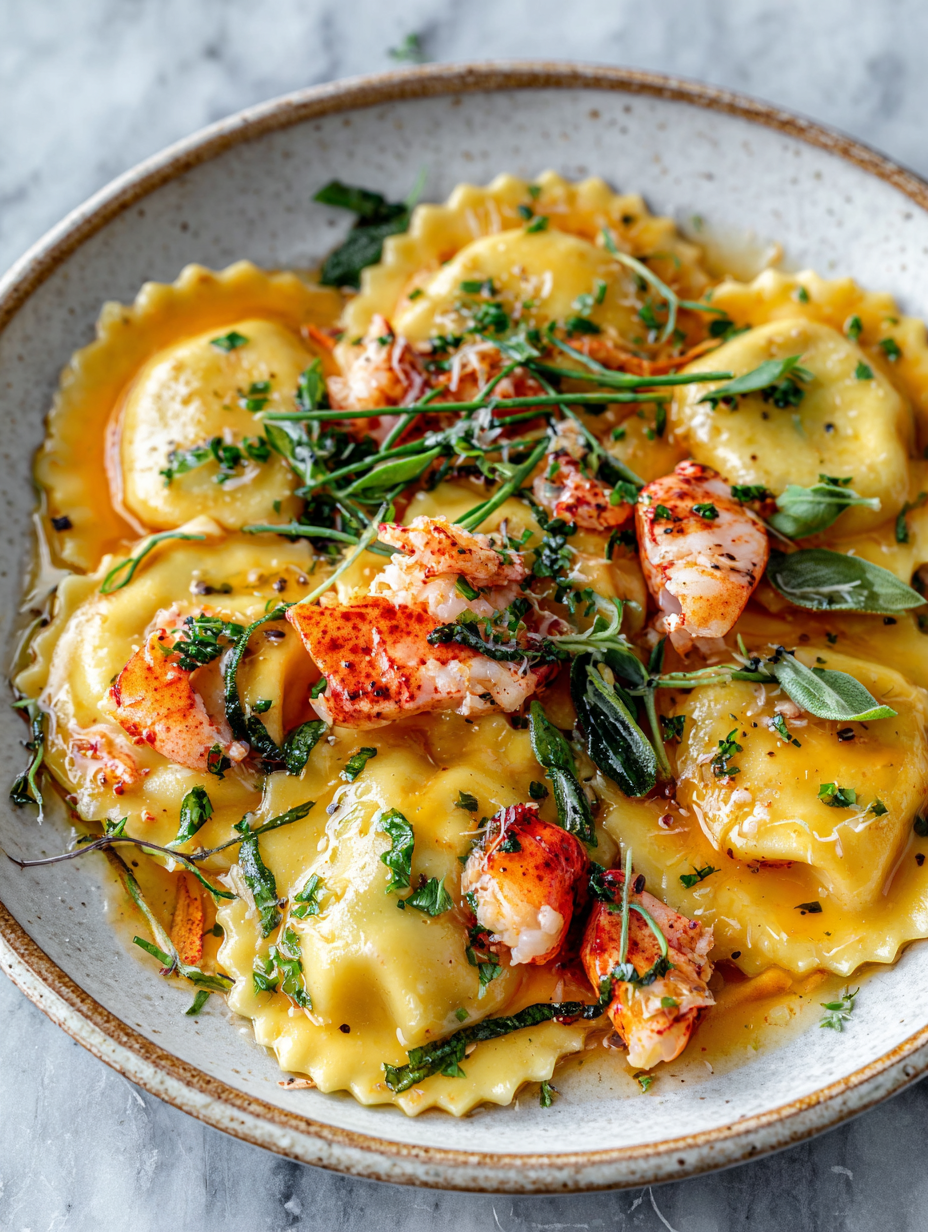
Lobster Ravioli
Ingredients
Equipment
Method
- Mix the flour and eggs together in a bowl, then knead until the dough is smooth and elastic, about 8 minutes. Wrap in plastic and let rest for 30 minutes to relax the gluten.
- While the dough rests, finely chop the cooked lobster meat. In a skillet, melt the butter over medium heat, add minced garlic, and cook until fragrant, about 1 minute. Remove from heat, then stir in the lobster, lemon zest, chopped herbs, and a squeeze of lemon juice. Season with salt and pepper to taste. Chill the filling for 15 minutes.
- Divide the rested dough into four portions. Using a pasta roller or rolling pin, roll each piece out to about 1 mm thick, dusting with flour to prevent sticking. Keep the sheets covered as you work to prevent drying out.
- Place teaspoon-sized dollops of the lobster filling evenly spaced on one sheet of pasta. Brush the edges with a little water, then carefully cover with another pasta sheet. Press gently around each mound to seal, removing excess air. Cut into individual ravioli using a cookie cutter or ravioli stamp.
- Bring a large pot of salted water to a boil. Carefully drop the ravioli in and cook for 3–4 minutes, or until they float to the surface and are tender. Use a slotted spoon to remove them gently.
- In a frying pan over medium heat, melt the butter until it turns golden brown and emits a nutty aroma, about 2–3 minutes. Add a squeeze of lemon juice and stir to combine. This will create a fragrant browned butter sauce.
- Place the cooked ravioli on serving plates. Drizzle generously with the browned butter sauce, then garnish with additional herbs or lemon zest if desired. Serve immediately to enjoy the tender pasta and luscious filling.
Tips for Perfect Lobster Ravioli
- Bolded mini-head: Use a pasta roller or a sturdy rolling pin—thin, even sheets make sealing easier and ravioli more tender.
- Bolded mini-head: When filling, keep the lobster mixture chilled—warm filling can make pasta tricky to seal without leaks.
- Bolded mini-head: Seal edges well, pressing firmly and brushing with water—this prevents filling from escaping during boiling.
- Bolded mini-head: Brown butter should be golden and nutty—remove from heat immediately to avoid bitterness and achieve perfect flavor.
- Bolded mini-head: Test doneness by floating—ravioli should rise quickly and have a tender, slightly chewy bite.
- Bolded mini-head: Rest assembled ravioli for 5 minutes before boiling—this helps the edges seal better and prevents tearing.
- Bolded mini-head: Finish with a quick squeeze of lemon—brightens the richness and enhances the seafood flavor.
Common Lobster Ravioli Mistakes
- FORGOT to check pasta sealing; it leaks filling. Press edges firmly and use water as glue.
- DUMPED filling too early; it needs a rest in fridge. Chill for 15 minutes before filling.
- OVER-TORCHED butter; it burns and tastes bitter. Remove from heat as soon as it turns golden.
- MISSED to let ravioli rest; they tear when boiling. Rest assembled ravioli 5 minutes before cooking.
Quick Fixes for Lobster Ravioli
- When pasta sticks, splash a little more flour and gently separate with a fork.
- If sauce separates, add a splash of warm water to bring it back together.
- DUMPED the filling too early? Chill it for 10 minutes to firm up before stuffing.
- Splash lemon juice when butter burns to rescue the sauce’s brightness.
- Patch a torn ravioli with a tiny dab of water and press edges together firmly.
Prep, store, and reheat tips
- Prepare the lobster filling up to a day in advance; keep it chilled in an airtight container to preserve freshness and flavor.
- Assemble the ravioli a few hours ahead, lay them in a single layer on a floured baking sheet, and cover with a damp cloth to prevent drying out. Refrigerate for up to 4 hours.
- Store cooked ravioli in an airtight container in the fridge for up to 2 days; reheat gently in simmering water or a warm pan to avoid overcooking and mushiness.
- Reheating: Gently warm in a skillet with a splash of butter or broth, cooking for 2–3 minutes until heated through; watch for delicate, tender texture and aromatic butter scent.
- For leftovers, avoid freezing as texture may suffer; best enjoyed fresh or within 24 hours for optimal sensory experience.
Top questions about Lobster Ravioli
1. Can I use frozen lobster?
Use fresh lobster if you can; it’s juicier and sweeter. Frozen works too—just thaw and dry thoroughly.
2. Can I swap lobster for other seafood?
Yes, you can substitute shrimp or scallops. They have less brine but still bring seafood flavor to the dish.
3. Can I prepare the filling ahead of time?
Absolutely. You can make the filling a day ahead. Keep it chilled in an airtight container.
4. How do I know when the ravioli are done?
Cook the ravioli in boiling salted water for 3–4 minutes until they float. Test a piece for tenderness.
5. What’s the best way to roll the pasta dough?
Use a pasta roller or rolling pin to keep the dough thin and even—aim for about 1 mm thickness.
6. How do I keep the ravioli from leaking?
Seal the edges thoroughly with water or beaten egg to prevent filling leaks during cooking.
7. How do I get perfect browned butter?
Brown the butter until it turns golden and smells nutty—this adds a rich, deep flavor to the sauce.
8. Should I add lemon or herbs at the end?
Finish with a squeeze of fresh lemon juice and chopped herbs for brightness and freshness.
9. How should I store leftovers?
Store cooked ravioli in a single layer in the fridge for up to 2 days. Reheat gently to avoid mush.

10. What if my pasta sticks or the sauce breaks?
If the pasta sticks, dust with more flour and gently separate. If sauce separates, add a splash of warm water.
This lobster ravioli dish isn’t just about impressing guests; it’s about reclaiming the luxury of homemade pasta and seafood, especially when the seasons bring the best lobsters. There’s a quiet satisfaction in creating something so delicate and refined with your own hands, a small act of indulgence that feels deeply personal.
Whenever I make this, I’m reminded that good food is rooted in simple ingredients and a bit of patience. It’s a dish that hints at celebration, yet comforts in its familiarity—perfect for holding onto in busy times or sharing during quiet weekends.

Hi, I’m Mason Harper, the voice and heart behind Rooting in Freshness. I’m so glad you’re here. This space was born from my love for seasonal ingredients, simple cooking, and the belief that food tastes better when it’s grown, chosen, and prepared with intention. Rooting in Freshness is more than a food blog to me. It is a reflection of how I live, cook, and connect with the world around me.

Leave a Reply