
Making mushroom risotto is like a slow dance with your ingredients. It’s about feeling the texture of each grain and listening to the gentle crackle of mushrooms as they brown. This process slows me down, forces me to stay present, and turns cooking into a form of mindful meditation.
There’s something deeply satisfying about standing over a pot, stirring patiently, watching the rice transform from raw to creamy, absorbing every bit of broth and flavor. It’s not quick, but that’s the point—this dish invites you into a quiet, tactile rhythm that clears your mind and centers your focus.
In a world that moves too fast, this risotto is a reminder to slow down and enjoy the process. It’s not just about the end result but about the tactile, sensory journey—savoring each moment of release and transformation in the pan.
Focusing on the meditative process of making mushroom risotto, emphasizing the tactile and sensory journey from raw ingredients to creamy perfection, as a form of mindful cooking practice.
The tactile art of risotto
- There’s a quiet joy in watching the mushrooms release their earthy aroma as they brown—like a small, savory symphony.
- I love how the creamy texture of the risotto feels against my spoon—almost like a warm hug after a long day.
- Getting lost in the stirring, feeling each grain of rice soften and swell with flavor, makes me forget everything else.
- The smell of garlic and mushroom bubbling together always grounds me—reminds me of cozy weekend mornings at home.
- I’ve had moments of pure pride when a batch turns out perfectly, silky and rich, like I’ve just captured a secret in a bowl.
The tactile art of risotto
This mushroom risotto was born out of a need to slow down and truly savor each step in cooking. I remember a rainy weekend, just me and a handful of mushrooms, feeling the earthy scent fill the kitchen as I stirred. It’s become my go-to dish when I want to reconnect with the tactile rhythm of cooking and find comfort in the simple act of nurturing rice and fungi into something creamy and soulful.
Contextual Trivia and Origins
- Mushroom risotto has roots in Northern Italy, where foragers relied on wild fungi for hearty, earthy meals.
- Historically, risotto was a way to stretch ingredients, turning simple rice and mushrooms into a luxurious dish.
- The technique of slowly cooking rice with broth to release its starch originates from medieval rice dishes in Italy.
- Different mushroom varieties bring unique flavors—porcini are prized for their deep, nutty aroma and umami punch.
- In Italy, risotto was traditionally a festive dish, often prepared during harvest festivals when mushrooms are plentiful.
Ingredient breakdown
- Mushrooms: I love using a mix of shiitake and cremini—they release a smoky, umami aroma that’s almost intoxicating. You can swap in dried porcini for a more intense earthiness, just rehydrate first.
- Arborio rice: This starchy rice gives the risotto its signature creaminess. If you only have Carnaroli or Vialone Nano, they work even better but keep an eye on cooking times—less starchy means less cream.
- Vegetable broth: I prefer homemade if I can, it’s richer and more layered. Store-bought is fine, just warm it up so it doesn’t cool down the rice when added—cold broth can turn the cooking process sluggish.
- Garlic: Fresh garlic’s punch adds depth. When minced fine and sautéed gently, it releases a fragrant, nutty aroma—don’t burn it or it turns bitter fast.
- Parmesan: I always use freshly grated Parmigiano-Reggiano. It melts into the risotto, creating a salty, umami-rich finish. For a dairy-free version, nutritional yeast gives an earthy, cheesy note.
- Butter: A knob at the end adds richness and gloss. If you want a vegan version, a splash of good olive oil can provide a similar silky finish, though the flavor shifts slightly.
- Olive oil: Use a good fruity extra virgin—its grassy brightness lifts the earthy mushrooms. Skip it if you prefer a lighter risotto or are avoiding oil, but it adds a vital flavor layer.
Spotlight on key ingredients
Mushrooms:
- I love using a mix of shiitake and cremini—they release a smoky, umami aroma that’s almost intoxicating. You can swap in dried porcini for a more intense earthiness, just rehydrate first.
- Arborio rice: This starchy rice gives the risotto its signature creaminess. If you only have Carnaroli or Vialone Nano, they work even better but keep an eye on cooking times—less starchy means less cream.
Arborio rice:
- This starchy rice gives the risotto its signature creaminess. If you only have Carnaroli or Vialone Nano, they work even better but keep an eye on cooking times—less starchy means less cream.
- Vegetable broth: I prefer homemade if I can, it’s richer and more layered. Store-bought is fine, just warm it up so it doesn’t cool down the rice when added—cold broth can turn the cooking process sluggish.
Notes for ingredient swaps
- Dairy-Free: Substitute Parmesan with nutritional yeast for a cheesy, umami flavor without dairy, though it won’t melt like cheese.
- Vegan: Use olive oil instead of butter and skip cheese, adding a splash of lemon juice for brightness and balance.
- Low-Sodium: Opt for a low-sodium broth and skip added salt, letting the mushroom’s earthiness shine through.
- Gluten-Free: The recipe is naturally gluten-free, just ensure your broth and any added ingredients are certified GF.
- Rice Variations: Carnaroli or Vialone Nano can replace Arborio—these grains are slightly firmer but still release plenty of starch for creaminess.
- Mushroom Types: Dried porcini rehydrated in warm water add deep, smoky flavor; fresh shiitake or cremini are milder but readily available.
- Broth: Homemade vegetable broth offers richer, layered flavor, but store-bought works well—just warm it beforehand to keep cooking smooth.
Equipment & Tools
- Wide-bottomed pan: Ensures even heat and easier stirring for creamy risotto.
- Wooden spoon: Gentle stirring to release starch without damaging the rice.
- Ladle: To add warm broth gradually, controlling absorption.
- Sharp knife: Precise chopping of mushrooms and garlic.
- Measuring cup: Accurate measurement of rice and liquids.
Step-by-step guide to mushroom risotto
- Equipment & Tools: A wide-bottomed pan (for even heat), a wooden spoon (for gentle stirring), a ladle (for broth), a sharp knife (for chopping), and a measuring cup (for rice and liquids).
- Heat vegetable broth in a saucepan over low heat; keep warm throughout cooking to prevent cooling the rice when added.
- Clean and chop a mix of mushrooms (shiitake, cremini) into bite-sized pieces; set aside.
- In your wide pan, heat 2 tbsp olive oil over medium heat (around 160°C / 320°F).
- Add the mushrooms and a pinch of salt; sauté until they release their earthy aroma, about 5 minutes, until browned and tender. (Check for a deep, nutty smell and slightly crispy edges).
- Push mushrooms to the side; add 1 minced garlic clove and cook for 30 seconds until fragrant—avoid burning to prevent bitterness.
- Add 1 cup Arborio rice to the pan; stir to coat each grain with oil and cook for 2 minutes until edges turn translucent (or until rice looks slightly shiny and opaque).
- Begin adding warm broth, one ladleful at a time, stirring constantly. Wait until the liquid is mostly absorbed before adding more; this should take about 20-25 minutes.
- Stir continuously, feeling the rice swell and release its starch, creating a creamy texture. The rice should be al dente—just tender with a slight bite—after about 20 minutes.
- Check for doneness: the risotto should be creamy with a slight jiggle in the center, and the grains tender yet firm. The aroma should be earthy and inviting.
- Remove from heat; stir in 2 tbsp butter and 1/4 cup freshly grated Parmesan. Adjust seasoning with salt and pepper. (It should be glossy and slightly thickened).
- Let rest for 2 minutes; serve immediately with a sprinkle of Parmesan and a drizzle of olive oil if desired.
Let the risotto sit for 2 minutes, then serve immediately, garnished with extra Parmesan and a drizzle of good olive oil for richness.

How to Know It’s Done
- Rice grains are tender yet retain a slight bite (al dente).
- Creamy consistency with a glossy, slightly pourable texture.
- Deep earthy aroma from mushrooms and toasted rice.
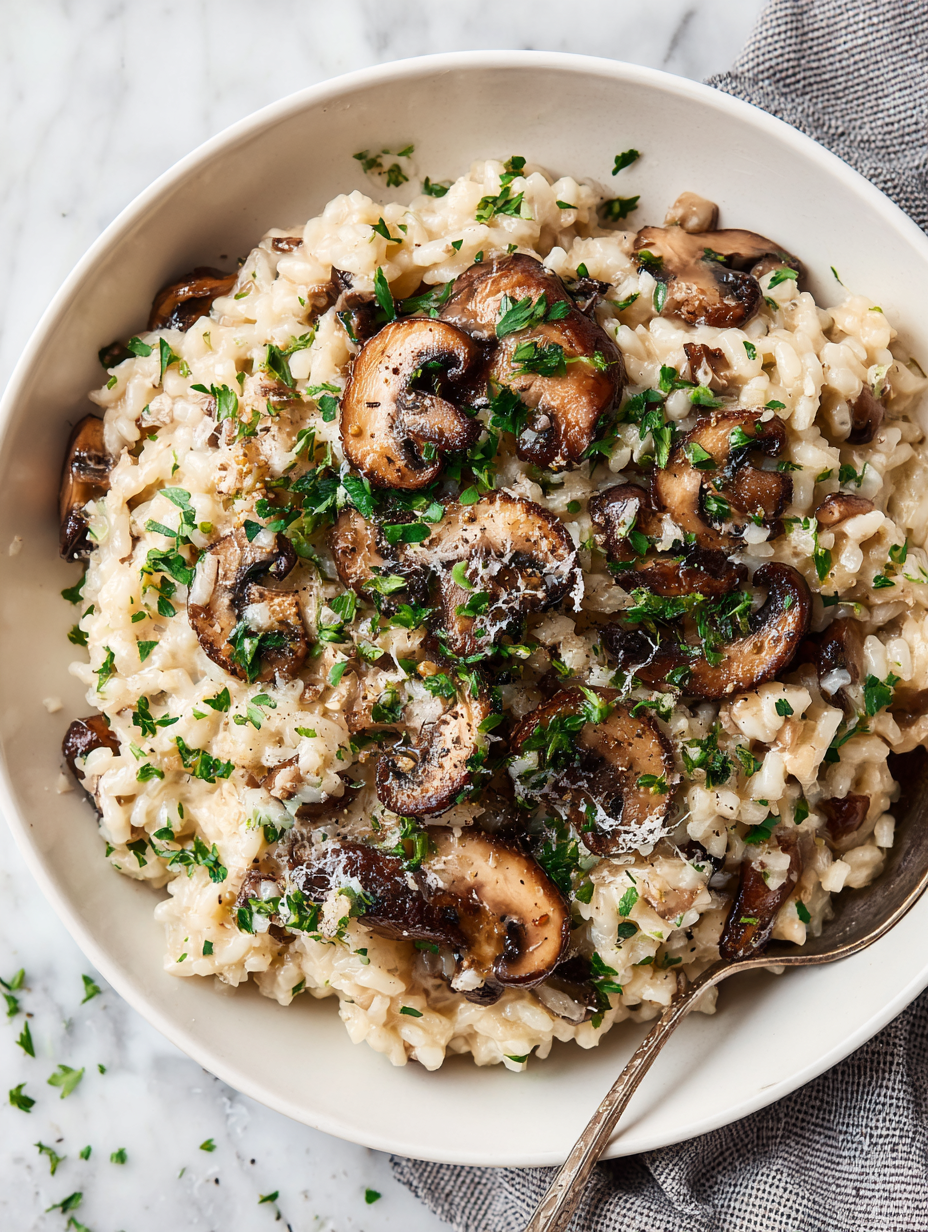
Meditative Mushroom Risotto
Ingredients
Equipment
Method
- Heat a wide-bottomed pan over medium heat and add olive oil, letting it shimmer and warm through.
- Add the chopped mushrooms to the pan and sauté, stirring occasionally, until they release their earthy aroma and turn golden brown, about 5 minutes.
- Push the mushrooms to the side of the pan, add the minced garlic, and cook gently for about 30 seconds until fragrant and slightly translucent, avoiding burning.
- Add the Arborio rice to the pan and stir well, coating each grain with oil and cooking for 2 minutes until the edges become slightly translucent and it starts to toast.
- Begin adding warm broth, one ladleful at a time, stirring constantly. Wait until the liquid is mostly absorbed before adding the next ladle, allowing the rice to slowly release its starch and become creamy.
- Continue stirring and adding broth until the rice is tender but still has a slight bite, about 20-25 minutes, and the mixture is thick and glossy.
- Remove the pan from heat and stir in the butter and freshly grated Parmesan cheese, mixing until melted and integrated into the risotto for added richness and shine.
- Season with salt and pepper to taste, then let the risotto rest for 2 minutes to settle the flavors.
- Serve the mushroom risotto immediately, garnished with extra Parmesan and a drizzle of olive oil if desired, celebrating its silky, creamy texture and earthy aroma.
Top tips for perfect risotto
- Consistent stirring: → Keep the rice moving to release maximum starch, creating that signature creamy texture.
- Gradual broth addition: → Pour in warm broth slowly, allowing each ladleful to be absorbed before adding more, for even cooking.
- Sauté mushrooms gently: → Use medium heat to develop flavor without burning, aiming for a deep, earthy aroma and crispy edges.
- Taste often: → Check seasoning and texture midway; adjust salt or broth if the rice feels too firm or bland.
- Finish with butter and cheese: → Stir in these last for richness and gloss, elevating the silkiness of your risotto.
- Use a wide pan: → Provides more surface area for even heat distribution and easier stirring, preventing sticking.
- Serve immediately: → Risotto thickens as it cools, so aim for a glossy, slightly runny texture right off the heat.
Common mistakes and how to fix them
- FORGOT to stir continuously → Stir constantly for creamy texture.
- DUMPED hot broth → Add broth gradually, keep it warm to prevent clumping.
- OVER-TORCHED mushrooms → Sauté mushrooms gently, avoid high heat to prevent burning.
- FAILED to taste test → Always taste for seasoning and creaminess before serving.
Quick fixes and pantry swaps
- When sauce shimmers too much, splash in a little cold water to calm the boil.
- If rice sticks, dump in a splash of hot broth and stir gently to loosen.
- When mushrooms are burnt, patch with a splash of wine and a squeeze of lemon.
- Splash a bit of vinegar if the risotto tastes flat or dull in flavor.
- Patch over-salted risotto with a small potato during cooking to absorb excess salt.
Prep, store, and reheat tips
- You can prep the mushrooms and broth up to a day ahead; keep mushrooms in an airtight container, and reheat broth gently to preserve flavor.
- Cooked risotto is best enjoyed fresh, but stored in an airtight container in the fridge for up to 2 days; reheating gently over low heat while stirring keeps it creamy.
- For longer storage, freeze leftovers in a sealed container for up to 1 month; expect some texture change, and reheat slowly to avoid mushiness.
- Reheated risotto may lose some creaminess and become slightly thicker; stir in a splash of warm broth or water to restore its silky texture and aroma.
Top questions about mushroom risotto
1. Can I use different mushrooms?
Use a mix of mushrooms for depth—shiitake, cremini, or dried porcini rehydrated. The variety adds layers of earthy aroma and umami that make the dish more complex.
2. Can I substitute Arborio rice?
Yes. Arborio rice is classic for its creamy starch release, but Carnaroli or Vialone Nano work well too and may even give a better texture if cooked properly.
3. Why does my risotto turn out lumpy?
Warm broth is key. Cold broth slows cooking and makes the risotto lumpier. Keep it simmering gently nearby for steady addition.
4. Can I make it dairy-free?
Yes. Use dairy-free butter or olive oil for richness. Nutritional yeast can replace Parmesan, but won’t melt and won’t add the same creaminess.
5. How do I know when the risotto is done?
Cook the risotto until the grains are tender but still have a slight bite—about 20 minutes. It should be glossy, creamy, and slightly jiggle in the center.
6. Can I make risotto in advance?
Yes. Make the mushroom sauté, broth, and prep ingredients ahead. Reheat gently with a splash of broth for best texture and flavor.
7. What if my risotto is too thick or too runny?
If the risotto gets too thick, stir in a little warm broth. If it’s too watery, cook a few more minutes while stirring until it thickens to desired consistency.
8. Can I add wine to the risotto?
Splash in a little white wine before adding broth for a bright, fruity aroma that complements the earthiness of mushrooms.

9. What do I do if my mushrooms burn?
When mushrooms stick or burn, deglaze the pan with a splash of wine or broth and gently scrape up browned bits to reincorporate flavor.
10. Any tips for stirring?
Use a wide pan for even cooking and stir constantly to release the rice’s starch, ensuring a creamy, silky texture without sticking or clumping.
This mushroom risotto is a quiet reminder that good things take time. The slow stirring, the fragrant aroma, the tender rice—each step is a small act of mindfulness, a chance to reconnect with the tactile rhythm of cooking. It’s a dish that celebrates patience and the simple pleasure of nurturing ingredients into something rich and soulful.
In the end, it’s about those moments of quiet satisfaction—when the creamy, earthy bites come together on your tongue, and the kitchen still carries the lingering scent of garlic and fungi. It’s a dish that demands your attention but rewards it with depth and comfort, especially when the world feels like it’s moving a little too fast.

Hi, I’m Mason Harper, the voice and heart behind Rooting in Freshness. I’m so glad you’re here. This space was born from my love for seasonal ingredients, simple cooking, and the belief that food tastes better when it’s grown, chosen, and prepared with intention. Rooting in Freshness is more than a food blog to me. It is a reflection of how I live, cook, and connect with the world around me.




Leave a Reply