
I’ve always been drawn to the way pork belly’s rich, caramelized exterior can surprise you when paired with something unexpectedly bright. This dish started as a simple idea—crisp, fatty pork paired with a tangy apple puree—that somehow turned into a little celebration of contrasts. The sweetness and acidity cut through the fat in a way that feels both indulgent and refreshingly balanced.
Cooking pork belly can sometimes feel intimidating because of its hefty fat layer, but when rendered properly, it becomes irresistibly crispy and tender. I love how the apple puree brightens the whole plate, cutting through the richness with a clean, slightly tangy burst. It’s one of those comfort-meets-sophistication dishes I keep coming back to, especially on chilly nights when I’m craving something hearty but with a twist.
Focusing on how the caramelized pork belly pairs unexpectedly well with a bright, slightly tangy apple puree, highlighting the balance of rich fat and crisp acidity.
Balancing Richness with Brightness
- There’s a thrill in getting that crackling skin just right, like biting into a piece of crispy gold.
- The moment I smell the caramelized pork mingling with the sweet, tart apple puree, I feel at home.
- Nothing beats the satisfaction of balancing rich, fatty pork with a fresh, zingy apple touch—pure comfort and chaos in one plate.
- Cooking this dish always reminds me of family dinners, where simple ingredients turn into something memorable.
- That first bite, where smoky meat meets bright apple, makes me feel like I’ve captured a perfect harmony.
The inspiration behind this dish
- This recipe took root from a memory of a rainy weekend, where I found myself craving something rich but with a touch of brightness to lift the mood. I remembered a trip to a small farm in Normandy, where they served pork belly with a tangy apple compote that stuck with me long after. That balance of crispy fat and sharp fruit was suddenly irresistible, and I wanted to recreate that feeling in my own kitchen, with a little twist of my own.
- Cooking pork belly can be a bit chaotic—the crackling skin can be tricky to perfect, and rendering the fat takes patience. But when you get it right, every bite offers that satisfying mix of crispy, tender, and smoky. Pairing it with a bright, slightly tart apple puree turns it into a dish that feels both indulgent and refreshingly simple. It’s become a go-to for nights when I want something cozy but not heavy.
- heading
- story_type
Historical and Cultural Tidbits
- Pork belly has deep roots in Chinese cuisine, where it’s often slow-braised or roasted for special occasions.
- Apple and pork pairing dates back centuries in European cooking, especially in Normandy and Brittany, where apples are plentiful.
- The caramelized crackle of pork belly was historically a festive dish in many Asian cultures, symbolizing abundance and good fortune.
Ingredient breakdown: key components
- Pork belly: I love the contrast of the juicy, fatty layers with that irresistible crackling skin. If yours isn’t crispy enough, crank up the heat at the end and keep a close eye—those edges crisp up fast and can burn.
- Apple: I prefer tart apples like Granny Smith for their bright flavor, but a sweeter apple like Fuji works if you want more sweetness and less tang—just adjust the sugar in the puree accordingly.
- Salt: I use coarse sea salt to really penetrate the pork skin, which helps achieve that crackling crunch. If you only have fine salt, sprinkle sparingly and massage it in for even seasoning.
- Sugar: A touch of sugar in the pork rub helps caramelize the skin beautifully. If you’re avoiding sugar, a drizzle of honey at the end can give a similar glossy, crispy effect.
- Vinegar: A splash of apple cider vinegar in the apple puree brightens the flavor and cuts through the sweetness. Skip it if you prefer a milder, more mellow puree—just remember to taste and balance as you go.
- Herbs: I like a sprig of thyme or bay leaf in the cooking process for depth, but feel free to skip or swap with rosemary if that’s what you have—just avoid overwhelming the subtle apple notes.
- Oil: I use a neutral oil like canola or vegetable for roasting to ensure even crispiness. If you want a richer flavor, a little duck fat or pork fat can boost the richness—just keep an eye on the smoke point.
Spotlight on key ingredients
Pork Belly:
- I love how the fat renders and the skin crisps up into a crackling shell that shatters satisfyingly with each bite. If your crackling isn’t crisp enough, crank the oven higher for the last few minutes and keep a close eye—those edges can burn fast.
- Apple: Tart apples like Granny Smith are my go-to for their bright, tangy punch. If you prefer a sweeter note, Fuji or Honeycrisp will mellow the acidity but keep the puree lively. The contrast of crisp apple and tender pork is what makes this dish sing.
Apple:
- When cooking, apples break down into a luscious, slightly chunky sauce if mashed well, or smooth if blended. Their juiciness and acidity cut through the richness of the pork, giving balance with each spoonful. A splash of vinegar brightens the flavor and adds a subtle shimmer to the puree.
- Pork Belly: Its layered fat and meat require slow roasting to render the fat properly and achieve that iconic crackle. The meat stays tender and juicy, providing a hearty contrast to the crisp skin. Proper scoring and salting are key to unlocking maximum crunch and flavor.
Notes for ingredient swaps
- Pork Belly: I prefer a well-marbled, skin-on piece for optimal crackling. If unavailable, thick-cut pork shoulder can work but won’t crisp as well.
- Apple: Tart apples like Granny Smith give a bright contrast, but Fuji or Honeycrisp add more sweetness—adjust sugar in the puree accordingly.
- Salt: Coarse sea salt helps crackling; if you only have fine salt, use less and press it into the skin for even crispiness.
- Sugar: A small amount in the rub promotes caramelization. For a sugar-free version, drizzle a little honey at the end for gloss and crunch.
- Vinegar: Apple cider vinegar brightens the puree. Skip or reduce if you prefer a milder, less tangy sweetness.
- Herbs: Fresh thyme or bay leaves add depth. Swap with rosemary or omit if you want a cleaner apple flavor.
- Oil: Neutral oils like canola or vegetable are best for roasting. For extra richness, try duck or pork fat, but watch the smoke point.
Equipment & Tools
- Oven: To roast the pork belly evenly.
- Wire rack: Elevate pork for even air circulation and crispy skin.
- Baking sheet: Catch drippings and support the wire rack.
- Sharp knife: Score the pork skin and chop apples.
- Saucepan: Cook and mash the apple puree.
- Silicone spatula: Stir and mash apples smoothly.
- Tongs: Handle hot pork slices safely.
Step-by-step guide to pork belly with apple puree
- Preheat your oven to 200°C (390°F). Pat the pork belly dry with paper towels. Score the skin in a crosshatch pattern, being careful not to cut into the meat. Rub generously with coarse sea salt and optional spices, pressing the salt into the skin and meat. Let sit at room temperature for 30 minutes to help draw out moisture.
- Place the pork belly on a wire rack set over a baking sheet. Roast in the oven for 40 minutes, then increase the oven temperature to 220°C (430°F). Continue roasting for another 20-30 minutes, or until the skin is deeply golden and crackling is crisp. Keep an eye on it; if the skin starts to burn, lower the heat slightly.
- While the pork is roasting, prepare the apple puree. Peel and core 3-4 tart apples (like Granny Smith). Chop into chunks and place in a saucepan with a splash of water, a teaspoon of sugar, and a teaspoon of lemon juice. Simmer over medium heat for 10-15 minutes until soft. Mash or blend until smooth. Stir in a splash of apple cider vinegar for brightness. Keep warm.
- Check the pork; the skin should be blistered and crackly, the meat tender. If the skin isn’t crispy enough, crank the oven to 250°C (480°F) for 5 minutes, watching carefully to avoid burning. Alternatively, briefly broil on high for 2-3 minutes, keeping a close eye.
- Remove the pork belly from the oven, tent with foil, and let rest for 10 minutes. During resting, the juices will redistribute, ensuring tender meat. Slice the meat into thick pieces, serving with a generous spoonful of apple puree on the side.
- Plate the slices, drizzle a little of the pork’s rendered fat over for extra flavor, and serve hot. The contrast of crispy, rich pork with bright, tangy apple puree should be evident with each bite.
Tent the pork with foil and rest for 10 minutes. Slice into thick pieces, serve with apple puree on the side. Drizzle with rendered fat if desired for extra flavor. For a crispier skin, briefly broil before serving.
How to Know It’s Done
- Crackling: Should be deeply golden, blistered, and crackly.
- Meat: Should be tender, juicy, and easily sliced.
- Apple Puree: Smooth, bright, with a balanced tang and sweetness.
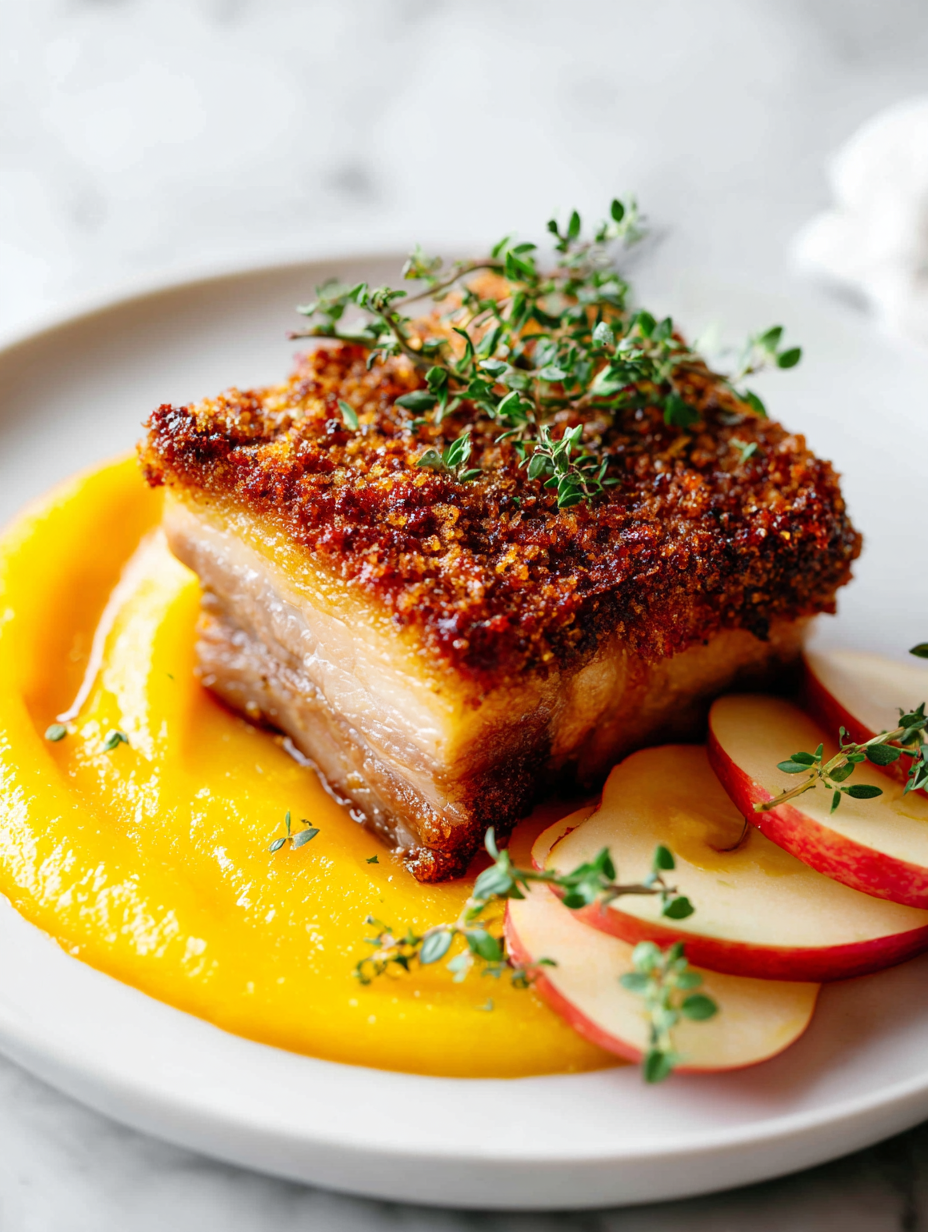
Crispy Pork Belly with Bright Apple Puree
Ingredients
Equipment
Method
- Preheat your oven to 200°C (390°F). Pat the pork belly dry with paper towels, then score the skin in a crosshatch pattern, pressing down firmly but carefully so you don’t cut into the meat. Rub the salt into the skin and meat, pressing it in to help draw out moisture, which will aid in crisping the skin. Let it rest at room temperature for about 30 minutes.
- Place the pork belly on a wire rack set over a baking sheet. Roast in the oven for 40 minutes. This begins rendering the fat and starts to crisp the skin.
- Increase the oven temperature to 220°C (430°F). Continue roasting for an additional 20-30 minutes, or until the skin is deeply blistered, golden, and crisp. Keep a close eye to prevent burning; if the skin isn’t crispy enough, briefly switch to high broil for 2-3 minutes, watching constantly.
- While the pork is roasting, peel and core the apples. Chop them into chunks and place in a saucepan with a splash of water, a teaspoon of sugar, and a squeeze of lemon juice. Simmer over medium heat for 10-15 minutes until the apples are soft and breaking down.
- Mash or blend the cooked apples until smooth. Stir in a tablespoon of apple cider vinegar to brighten the flavor. Taste and adjust with a little more sugar or vinegar if needed. Keep warm.
- Once the pork belly skin is blistered and crisp, remove it from the oven. Tent loosely with foil and let it rest for 10 minutes to allow the juices to redistribute.
- Slice the pork belly into thick pieces, revealing the tender meat and crispy skin. Serve with a generous spoonful of the bright apple puree on the side, drizzling a little of the rendered fat over the top for extra flavor.
- Enjoy the contrasting textures: the crackling skin, tender meat, and tangy apple puree create a balanced and satisfying dish.
Pro tips for perfect pork belly
- Bolded: Score the skin deeply but carefully to help the fat render and the crackling to form evenly.
- Bolded: Pat the pork dry thoroughly before roasting; moisture is the enemy of crispy skin.
- Bolded: For extra crispiness, finish the pork under the broiler for 2-3 minutes, keeping a close eye to prevent burning.
- Bolded: When making the apple puree, simmer apples gently and mash or blend until smooth for a velvety texture.
- Bolded: Rest the pork for at least 10 minutes after roasting; this redistributes juices and maintains tenderness.
- Bolded: Use a high heat in the final roasting stage to blister and crackle the skin—check frequently to avoid burnt edges.
Common mistakes and how to fix them
- TOO MUCH SALT: Oversalting ruins crackling—use coarse salt, press into skin, and adjust to taste.
- SKIN NOT CRISPY: If skin isn’t crackly, increase oven temp near the end, but watch closely.
- FAT NOT RENDERED: If fat isn’t melting, extend roasting time at high heat, but prevent burning.
- PUREE TOO THICK: If apple puree is chunky, blend longer or add a splash of water for smoothness.
Quick fixes for pork belly
- If skin isn’t crisp, splash a little vinegar on the pork and broil for 2 minutes.
- When fat isn’t rendering, increase oven temperature to 220°C (430°F) for 10 minutes.
- Dumped too much salt? Rinse the pork briefly and pat dry before roasting again.
- Over-torched skin? Shield with foil immediately and lower oven to 200°C (390°F).
- Splash a glug of apple cider vinegar into the puree if it’s too thick or dull-shaded.
Prep, store, and reheat tips
- You can prepare the pork belly a day in advance by scoring, salting, and refrigerating it uncovered; the skin will dry out, helping achieve better crackle during roasting.
- The apple puree can be made up to 2 days ahead and stored in an airtight container in the fridge; stir well before serving to maintain its bright flavor and smooth texture.
- Refrigerated cooked pork belly is best consumed within 3 days; reheat gently in a low oven (around 150°C/300°F) until warmed through, with the crackling still crispy and the meat juicy.
- To reheat, tent the pork with foil to prevent drying out, and check that the internal temperature reaches about 60°C (140°F) for safety and optimal tenderness. The apple puree can be gently warmed on the stove, stirring to restore its bright, tangy qualities.
Top questions about Pork Belly with Apple Puree
1. How do I pick the best pork belly?
Look for a piece with balanced layers of fat and meat, and good skin that feels firm and cool to the touch. The fat should be slightly translucent, not opaque or dry.
2. Why do I need to score the pork skin?
Score the skin deeply but carefully without cutting into the meat. This helps the fat render and creates that perfect crackle. Use a sharp knife and steady hand.
3. How do I get crispy crackling?
Roast the pork belly at high heat initially to promote crackling, then lower the temperature to finish cooking. This builds a crispy exterior while keeping the inside tender.
4. How do I make a good apple puree?
Simmer peeled apples with a splash of water, sugar, and lemon juice until soft. Blend or mash until smooth. Taste and add vinegar or more sugar if needed to balance brightness and sweetness.
5. Why should I rest the pork belly?
Rest the pork for about 10 minutes after roasting. Tent loosely with foil. This helps the juices redistribute and keeps the meat tender when sliced.
6. What if my crackling isn’t crispy?
If the skin isn’t crispy enough, crank the oven to 250°C (480°F) for 3-5 minutes, watching closely. For more crunch, broil on high for 2 minutes but stay nearby.
7. Can I use regular salt instead of sea salt?
Use coarse sea salt for scoring and salting the pork. It draws out moisture and helps achieve a crackly skin. Fine salt can be used sparingly but won’t give the same effect.
8. How do I reheat leftovers without losing texture?
Reheat the sliced pork gently in a low oven (around 150°C/300°F) for about 15 minutes. Warm the apple puree separately until just hot—avoid boiling to keep it bright.
9. Should I add vinegar during roasting?
For an extra flavor boost, brush the pork skin with a little vinegar before roasting. It enhances crispness and adds a slight tang that complements the apple.

10. Which apples are best for the puree?
When selecting apples, tart varieties like Granny Smith give a bright, tangy flavor. Sweeter apples are fine, but adjust sugar in the puree accordingly for balance.
This dish, with its crispy pork and tangy apple puree, feels like a little celebration every time I make it. There’s something about balancing the rich, crackling meat with that bright, slightly tart fruit that keeps me coming back, especially on cooler evenings. It’s honest, straightforward comfort, with just enough complexity to make it feel special.
Cooking it reminds me that simple ingredients—fatty pork, fresh apples, good salt—can still surprise me with how much flavor they deliver. It’s not fancy, but it hits all the right notes of texture and taste. Sometimes, that’s all I need to feel a little more grounded at the end of the day.

Hi, I’m Mason Harper, the voice and heart behind Rooting in Freshness. I’m so glad you’re here. This space was born from my love for seasonal ingredients, simple cooking, and the belief that food tastes better when it’s grown, chosen, and prepared with intention. Rooting in Freshness is more than a food blog to me. It is a reflection of how I live, cook, and connect with the world around me.
Leave a Reply