
This recipe is all about making the most of peak tomato season, even if you’re stuck inside in winter. I love using only the ripest, most fragrant tomatoes I can find—there’s a sweetness and depth that canned just can’t match. The fresh basil adds a punch of herbal brightness that makes the whole dish feel like a little burst of summer in your bowl.
I’ve made this countless times, usually when I want something honest and straightforward but with a little special touch. It’s surprising how just a handful of ingredients—good tomatoes, fresh basil, garlic, olive oil, and spaghetti—can come together so effortlessly and taste like a celebration. No fuss, no complicated techniques, just honest flavors shining through.
Focusing on how using only the ripest, most fragrant tomatoes and fresh basil can transform a simple spaghetti into a celebration of summer’s peak flavors, even in the dead of winter.
The secret life of fresh basil
- Using just ripe tomatoes feels like capturing summer’s essence in every bite.
- Chopping fresh basil releases a fragrant aroma that instantly lifts my spirits.
- There’s a quiet pride in turning simple ingredients into something deeply satisfying.
- Sometimes, I get overwhelmed by the chaos of the day, but this dish always grounds me.
- Sharing this meal with loved ones reminds me how small moments can taste so sweet.
The story behind this recipe
- This dish came about during a summer visit to Italy, where I watched a small family kitchen turn simple tomatoes and basil into a symphony of aroma and flavor. I realized that the magic was in using the freshest ingredients and letting them shine without much fuss. It’s become my go-to when I want to feel connected to those sun-drenched afternoons, even in winter.
- Every time I make it, I remember the hurried mornings picking ripe tomatoes at the market, their skins bursting with juice. The scent of basil crushed between my fingers transports me back to that tiny alleyway, alive with the chatter of locals and the smell of garlic in the air. It’s a humble recipe, but one that always feels like a small celebration of season and simplicity.
- heading: ‘The story behind this recipe’
Contextual origin, trivia, or history
- This simple dish traces back to Italy’s Southern regions, where fresh ingredients were always king.
- Basil’s journey into Italian cuisine was likely influenced by trade routes from Asia centuries ago.
- Originally, spaghetti with tomato and basil was a humble peasant meal, quickly turning into a classic due to its flavor and accessibility.
Ingredient breakdown: key components
- Tomatoes: I prefer ripe, heirloom varieties—they’re juicy, sweet, and have that deep, sun-kissed aroma. If you only have canned, go for San Marzano for richer flavor.
- Fresh Basil: The fragrance of basil crushed between your fingers is intoxicating—use it generously. If basil’s scarce, a pinch of dried can work, but nothing beats fresh for vibrancy.
- Garlic: I love minced garlic that’s just starting to turn golden—its nutty aroma really wakes up the dish. If you’re pressed for time, garlic powder is a quick stand-in, but fresh is best.
- Olive Oil: I use a good extra virgin olive oil—its peppery notes bring everything together. If it’s too strong or bitter, a lighter drizzle can tone it down without losing depth.
- Spaghetti: Choose a high-quality, bronze-cut pasta—more texture, better sauce cling. If you’re in a pinch, any good dried spaghetti will do, but don’t skimp on cooking time to keep it al dente.
- Salt: I season the water generously—it’s the only chance to flavor the pasta itself. If you forget, the sauce won’t taste as vibrant, so taste and adjust before serving.
Spotlight on key ingredients
Tomatoes:
- I love ripe heirlooms—they’re juicy, sweet, with a sun-kissed aroma that’s unmistakable. Canned San Marzanos offer a rich, deep flavor when fresh isn’t available.
- Basil: The fragrance of basil leaves crushed between fingers is lively and herbal, releasing a burst of green aroma. It’s most vibrant when added at the end to preserve its bright notes.
Basil:
- Fresh Basil: It’s delicate and fragrant, turning slightly dull if cooked too long. The aroma really wakes up the dish when torn directly before adding.
- Olive Oil: When heated, it releases a peppery aroma and a slight shimmer, coating the pasta with richness. A good quality oil makes a noticeable difference in flavor.
Notes for ingredient swaps
- Fresh Tomatoes: I prefer ripe heirlooms for their sweetness. If only canned are available, use San Marzano for richer flavor.
- Fresh Basil: The fragrant leaves crushed release aroma; dried basil can be a decent substitute but lacks vibrancy.
- Garlic: Fresh garlic provides a nutty aroma, but garlic powder can work in a pinch—just use less and add earlier to mellow.
- Olive Oil: Use a good extra virgin for depth; if too bitter, opt for a milder light-tasting oil, but avoid vegetable oils.
- Spaghetti: High-quality bronze-cut pasta grabs sauce better; in a pinch, any dried spaghetti can do, but cook al dente.
- Salt: Season pasta water generously—if forgotten, season the sauce more to compensate for blandness.
- Onion: Finely minced onion can add sweetness if you’re out of garlic; cook until translucent for best flavor.
Equipment & Tools
- Large pot: Boil pasta efficiently in plenty of water.
- Skillet: Cook and toss the sauce and pasta.
- Wooden spoon: Stir ingredients gently without scratching pans.
- Knife and cutting board: Prepare garlic, basil, and tomatoes.
- Tongs or fork: Combine pasta with sauce evenly.
Step-by-step guide to spaghetti with tomato and basil
- Gather your equipment: a large pot for boiling pasta, a skillet for sauce, a wooden spoon, and a knife and cutting board for prep.
- Bring a large pot of water to a rolling boil—about 100°C (212°F). Salt generously—like sea water. Add spaghetti and cook until just al dente, about 8 minutes. Stir occasionally to prevent sticking. Drain, reserving a cup of pasta water.
- While pasta cooks, peel and finely chop 3-4 garlic cloves. Pick fresh basil leaves, roughly tear or chop—about a handful. Ripe tomatoes should be washed and roughly chopped, skin and all if organic, or peeled if desired.
- In the skillet, heat 3 tbsp of good extra virgin olive oil over medium heat—about 180°C (356°F). Add garlic, cook for 30 seconds until fragrant and just starting to turn golden. Watch for a nutty aroma and slight crackle.
- Add chopped tomatoes to the skillet. Cook for 5-7 minutes, stirring often, until they break down slightly and release juice. The mixture should smell sweet and fresh, with a hint of basil. If the sauce thickens too much, splash in reserved pasta water to loosen.
- Stir in the torn basil, cooking for another minute until fragrant. Taste and adjust salt—aim for a balanced, bright flavor. If the sauce looks dull, a splash more olive oil can brighten it.
- Add drained spaghetti directly to the skillet. Toss to coat evenly—use tongs or a fork—adding more pasta water if needed to loosen the sauce. The pasta should glisten and cling with a slight chew.
- Turn off heat. Let the pasta rest for a minute in the skillet, letting flavors meld. Taste again, adjusting salt or basil if needed. Serve immediately on warmed plates, with extra basil if desired.
Serve immediately while hot. Garnish with extra basil, a drizzle of olive oil, and a sprinkle of sea salt if desired. For best flavor, eat right after plating.
How to Know It’s Done
- Pasta is al dente—firm to the bite, with a slight resistance.
- Tomato sauce is fragrant, slightly thickened, and vibrant red.
- Basil aroma is fresh and herbal, coating the pasta evenly.
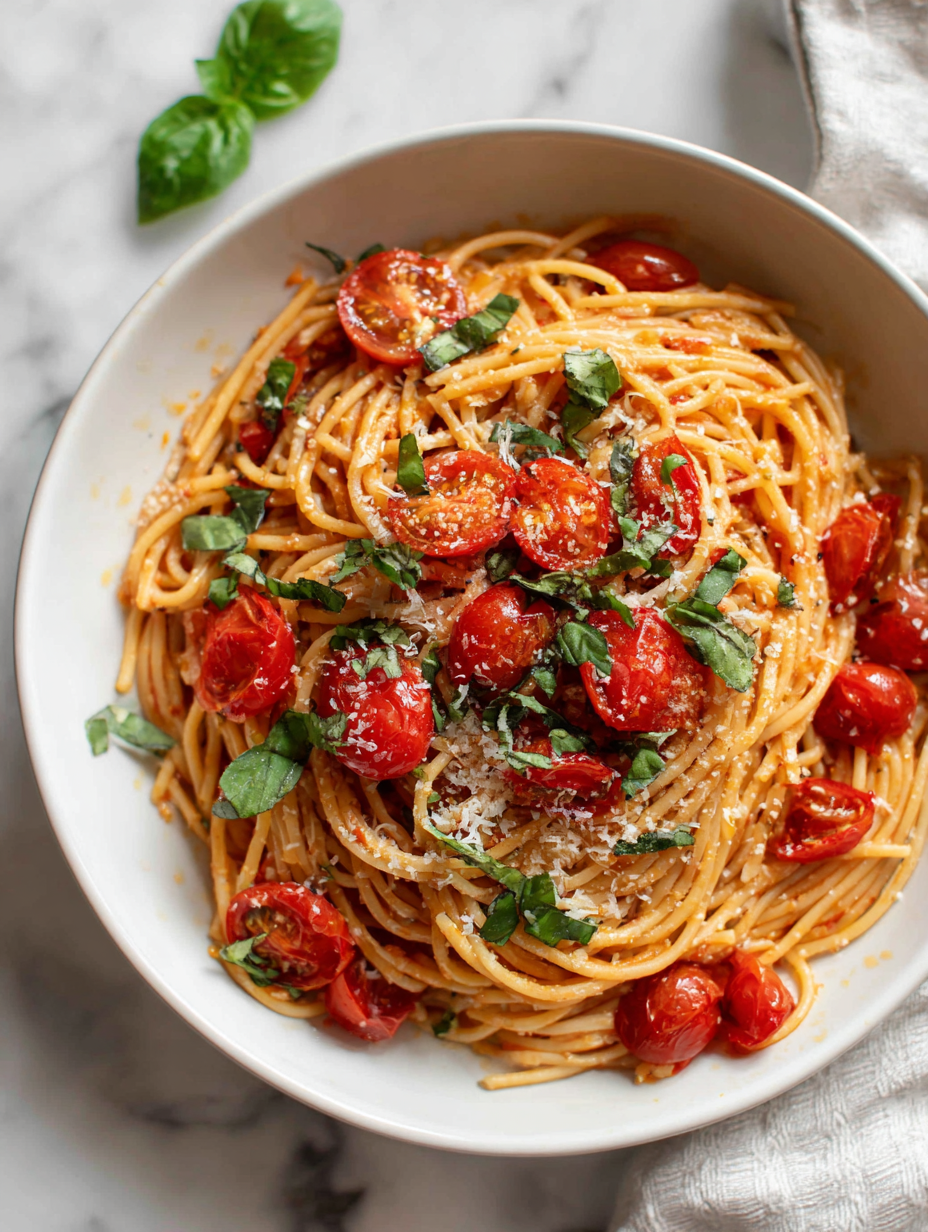
Simple Tomato and Basil Spaghetti
Ingredients
Equipment
Method
- Bring a large pot of salted water to a rolling boil. Add the spaghetti and cook until just al dente, about 8 minutes, stirring occasionally. Drain, reserving a cup of pasta water, and set aside.
- Meanwhile, wash and roughly chop the ripe tomatoes, breaking them down slightly with your hands if desired. Peel and mince the garlic cloves to release their aroma.
- Heat the olive oil in a skillet over medium heat until shimmering and fragrant—about 1 minute. Add the minced garlic and cook for 30 seconds, stirring constantly until fragrant and just golden, avoiding burning.
- Add the chopped tomatoes to the skillet. Cook for 5-7 minutes, stirring occasionally, until the tomatoes start to break down and release their juices, creating a vibrant, slightly chunky sauce with a sweet aroma.
- Stir in the torn basil leaves and cook for another minute until fragrant. Taste the sauce and season with salt, adjusting to your preference. If the sauce looks thick, add a splash of reserved pasta water to loosen it slightly.
- Add the drained spaghetti directly into the skillet. Toss gently with tongs or a fork to coat the pasta evenly in the sauce, adding more reserved pasta water if needed to achieve a glossy, well-coated look.
- Turn off the heat and let the pasta sit for a minute to allow flavors to meld. Taste again and adjust salt or basil if needed. Serve immediately on warm plates, garnished with extra basil if desired and a drizzle of olive oil for shine.
Pro tips for perfect spaghetti
- Bolded Mini-Head: Use a generous pinch of salt in the pasta water—this is your only chance to season the pasta itself.
- Bolded Mini-Head: Crush basil between your fingers to release maximum aroma before chopping or adding whole.
- Bolded Mini-Head: Cook garlic just until fragrant and golden—avoid burning to prevent bitterness and develop nutty notes.
- Bolded Mini-Head: Simmer chopped tomatoes until they break down and release their juices—about 5-7 minutes for a bright, flavorful sauce.
- Bolded Mini-Head: Reserve a cup of pasta water before draining—use it to loosen the sauce and add richness if needed.
- Bolded Mini-Head: Toss pasta directly into the sauce and finish cooking together—this helps the flavors meld beautifully.
- Bolded Mini-Head: Finish with a drizzle of olive oil and fresh basil—these final touches brighten and elevate the dish.
Common mistakes and how to fix them
- FORGOT to check pasta doneness → Taste for al dente, firm bite, not mushy.
- DUMPED too much olive oil → Use just enough for a glossy, not greasy, sauce.
- OVER-TORCHED garlic → Cook on medium heat, stir often, for a nutty aroma.
- FAILED to reserve pasta water → Use to loosen sauce and enhance flavor.
Quick fixes and pantry swaps
- If sauce is too thick → Splash in pasta water to loosen and add shine.
- When tomatoes lack sweetness → Add a pinch of sugar or a drizzle of honey, then simmer briefly.
- Splash overcooked garlic → Quick stir in a splash of olive oil to mellow bitterness.
- Patch dull flavor → Add a squeeze of lemon juice to brighten the sauce.
- Shield basil from heat → Add at the very end to preserve aroma and vibrant color.
Prep, store, and reheat tips
- Chopped tomatoes and basil can be prepared a few hours ahead; store in airtight containers in the fridge, where flavors deepen and intensify, keeping for up to 24 hours.
- Cooked spaghetti can be cooled quickly, then stored in an airtight container in the fridge for up to 1 day. Reheat in boiling water or microwave, adding a splash of olive oil to revive texture.
- The sauce can be made a day in advance; keep refrigerated and reheat gently over low heat, stirring occasionally, until fragrant and warmed through—look for a bright, bubbly aroma.
- Fresh basil is best added right before serving to preserve its fragrance and vibrant color. Dried basil can be stirred into the sauce during reheating, but it won’t have the same fresh punch.
- For longer storage, freeze the cooked sauce in small portions for up to 3 months. Thaw in the fridge overnight, then reheat with a little water or olive oil until steaming and fragrant.
Top questions about spaghetti with tomato and basil
1. Can I use canned tomatoes instead of fresh?
Fresh tomatoes make the sauce bright and juicy. Canned tomatoes can work, but fresh really elevate the flavor.
2. Should I add sugar to the tomato sauce?
Yes, adding a pinch of sugar helps to balance acidity in the tomatoes, making the sauce smoother and more rounded.
3. How do I avoid burning the garlic?
Cooking garlic just until fragrant and golden prevents bitterness. Burned garlic tastes acrid and ruins the flavor.
4. Why should I save pasta water?
Reserve some pasta water before draining. It’s starchy and helps loosen the sauce, making it cling better.
5. Is it better to chop or tear basil?
Tearing basil by hand releases more aroma than chopping, giving the dish a lively herbal punch.
6. When should I add basil to the dish?
Adding basil at the end preserves its bright, herbal aroma. Cooking it too long dulls the fragrance.
7. What kind of spaghetti is best?
Use high-quality, bronze-cut pasta for better sauce adherence and a satisfying texture. Cheaper pasta can feel limp.
8. How do I know if the dish is seasoned correctly?
Taste and adjust the seasoning before serving. A little salt or olive oil can brighten the entire dish.
9. Can I make this ahead and reheat?
Serve immediately while hot. Reheating can cause the pasta to get mushy and the sauce to lose brightness.

10. How do I choose the best tomatoes?
Use fresh, ripe tomatoes for the best flavor. If unavailable, high-quality canned San Marzano tomatoes are a good substitute.
This simple spaghetti dish captures the essence of summer, even if you’re making it in the dead of winter. The smell of ripe tomatoes and fresh basil as it cooks somehow makes everything feel a little brighter, a little warmer. It’s honest food, meant to be enjoyed with no fuss and a glass of whatever you like.
Sometimes, it’s the easiest recipes that remind us of the importance of fresh ingredients and patience in the kitchen. It’s not just about the taste, but the small moments—chopping basil, listening to the crackle of garlic—that make cooking feel real. And that’s what keeps me coming back to this meal, season after season.

Hi, I’m Mason Harper, the voice and heart behind Rooting in Freshness. I’m so glad you’re here. This space was born from my love for seasonal ingredients, simple cooking, and the belief that food tastes better when it’s grown, chosen, and prepared with intention. Rooting in Freshness is more than a food blog to me. It is a reflection of how I live, cook, and connect with the world around me.
Leave a Reply