
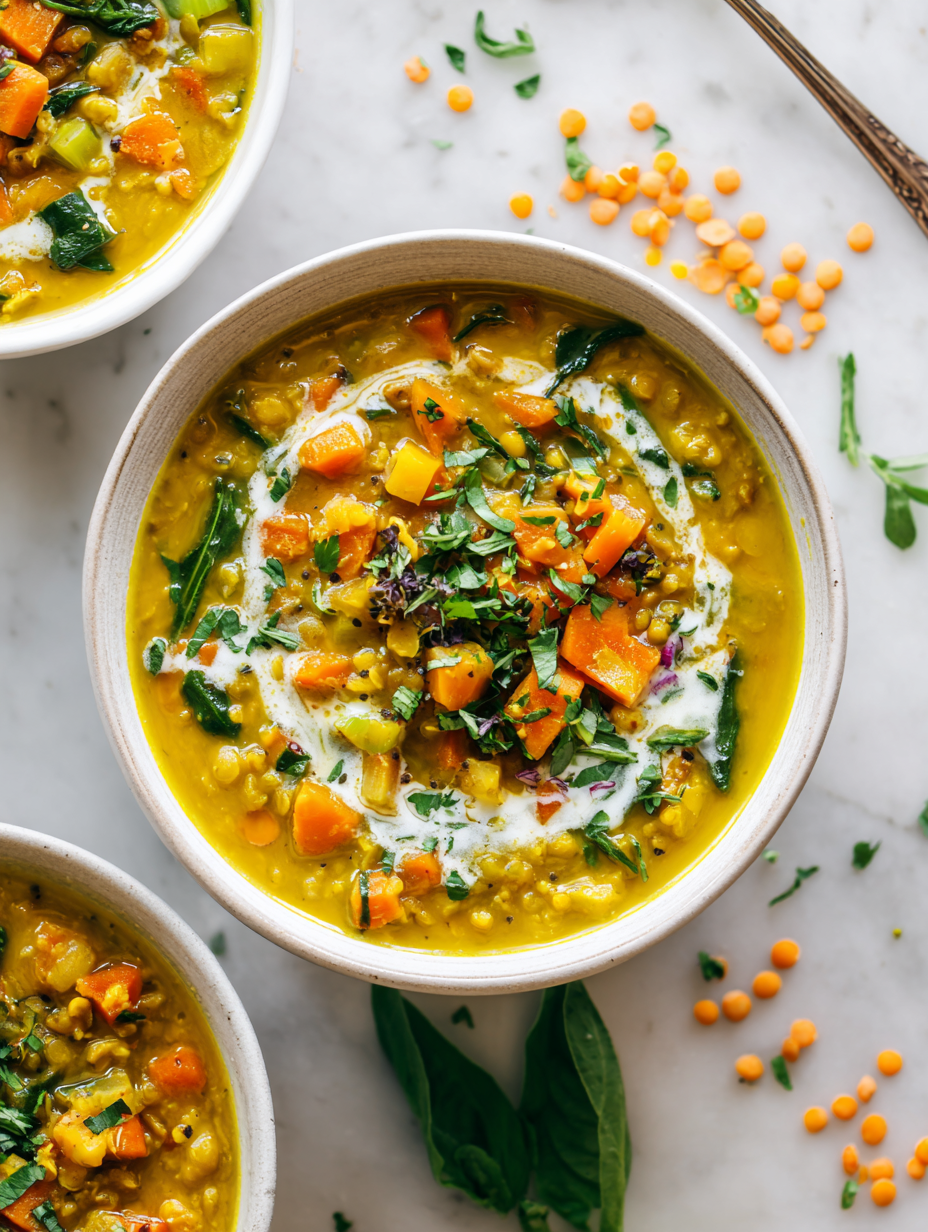
This turmeric lentil vegetable soup isn’t just about nourishing the body; it’s about unlocking a deeper layer of flavor in everyday ingredients. I’ve always been drawn to how turmeric’s smoky, slightly bitter notes can transform a simple pot of lentils and veggies into something more vibrant and complex. It’s like peeling back the spice’s humble exterior to discover a rich, almost mysterious heart.
In my kitchen, I see this soup as a kind of quiet rebellion against the idea that healthy food has to be boring. The golden hue invites curiosity, but it’s the aroma—earthy, with hints of cumin and a touch of lemon—that really makes me pause. It’s a humble dish with a secret: beneath its simple surface, it’s packed with layers of flavor waiting to be explored.
Focusing on turmeric’s hidden depths beyond its health perks, I see this soup as a canvas for exploring its complex, smoky, slightly bitter flavor. It’s about peeling back the layers of a humble spice and transforming simple ingredients into something vibrant and unexpected. That bright yellow hue isn’t just for looks—it’s an invitation to look closer, smell deeper, and taste more than just comfort.
Peeling Back the Layers of Spice
- This soup reminds me of lazy Sunday mornings, where the smell of turmeric and cumin fills the air and feels like a warm hug.
- I love how the vibrant yellow color brightens my kitchen—it’s a little reminder that simple ingredients can be stunning.
- There’s a quiet thrill in discovering how a pinch of turmeric can turn humble lentils into something almost magical.
- Making this soup feels like an act of slow, deliberate care—each spoonful a small celebration of everyday nourishment.
- Sharing this bowl with friends always sparks a moment of pause, a reminder that good food is about connection as much as flavor.
Peeling Back the Layers of Spice
- This soup came from a moment of trying to use up a bunch of odds and ends in my pantry. I was tired of the usual vegetable stews and wanted something that felt a little more alive—something that sparked my senses as much as my appetite. Turmeric’s earthy, smoky depths paired with the humble lentil felt like a quiet rebellion against bland, predictable meals.
- One rainy afternoon, I threw together what I had: carrots, spinach, a dash of ginger, and a generous pinch of turmeric. The aroma that filled the kitchen was unexpectedly warm and complex, like a quiet secret I’d uncovered. It made me realize that simple ingredients, when treated with a little curiosity, can turn into something surprisingly rich in flavor and soul.
- heading
- story_type
Historical and Cultural Tidbits
- Turmeric has been used in Indian cuisine for thousands of years, valued not only for flavor but also for its medicinal properties.
- This bright yellow spice was once so prized that it was traded as currency in some ancient cultures.
- Lentils are one of the oldest cultivated legumes, dating back over 8,000 years, making them a staple in many traditional diets.
- The combination of turmeric and lentils in soups reflects a broader tradition of hearty, plant-based dishes in South Asian culinary history.
- In recent years, turmeric’s reputation as a superfood has propelled it into modern kitchens worldwide, often inspiring creative recipes like this one.
Ingredient breakdown
- Turmeric: I love using fresh turmeric root for its earthy, slightly peppery aroma, but powdered works just as well—just remember, a little goes a long way to avoid bitterness.
- Lentils: Brown or green lentils hold their shape nicely, but red lentils break down into a creamy texture—pick based on whether you want chunkier or smoother soup.
- Carrots: The natural sweetness of carrots brightens the broth and adds a subtle, earthy tone—don’t skip their tender, almost jammy final texture.
- Spinach: Fresh spinach wilts quickly, releasing a vibrant green and mild bitterness—consider kale if you want more chew and a sturdier bite.
- Vegetable stock: Homemade or store-bought, it’s the flavor base that makes or breaks the soup—look for one with a robust, well-rounded profile to boost the earthy spices.
- Ginger: Fresh ginger adds a zing that cuts through the richness; grate it finely for even dispersion or slice for bursts of fiery aroma during cooking.
Spotlight on key ingredients
Turmeric:
- I love using fresh turmeric root for its earthy, slightly peppery aroma, but powdered works just as well—just remember, a little goes a long way to avoid bitterness.
- Lentils: Brown or green lentils hold their shape nicely, but red lentils break down into a creamy texture—pick based on whether you want chunkier or smoother soup.
- Carrots: The natural sweetness of carrots brightens the broth and adds a subtle, earthy tone—don’t skip their tender, almost jammy final texture.
Spinach & Vegetable Stock:
- Spinach: Fresh spinach wilts quickly, releasing a vibrant green and mild bitterness—consider kale if you want more chew and a sturdier bite.
- Vegetable stock: Homemade or store-bought, it’s the flavor base that makes or breaks the soup—look for one with a robust, well-rounded profile to boost the earthy spices.
Notes for ingredient swaps
- Dairy-Free: Swap coconut milk for cream or yogurt. It keeps the soup creamy without dairy, adding a subtle coconut sweetness.
- Vegetable Broth: Use mushroom broth for an umami boost or water with a dash of soy sauce for a lighter, less savory base.
- Lentils: Red lentils break down into a smoother puree, ideal for a creamier texture, while green or brown lentils stay firmer and hold shape.
- Greens: Kale can replace spinach for more chew and earthiness, or arugula for a peppery note that brightens the soup.
- Spice Level: Add a pinch of cayenne or chili flakes to introduce heat, or omit for a milder, more herbal flavor.
- Fresh Ginger: Use ground ginger if fresh isn’t available, but reduce the amount as it’s more concentrated and can overpower.
- Oil: Replace neutral oil with ghee or toasted sesame oil for richer, more complex aromatic notes.
Equipment & Tools
- Large heavy-bottomed pot: Ensure even heat for simmering and cooking lentils thoroughly.
- Sharp knife: Quick, clean chopping of vegetables and aromatics.
- Wooden spoon: Gentle stirring without scratching the pot.
- Immersion blender or regular blender: Puree part of the soup for a creamier texture if desired.
Step-by-step guide to Turmeric Lentil Soup
- Gather all your equipment: a large heavy-bottomed pot (for even heat distribution), a sharp knife (for quick chopping), a wooden spoon (for gentle stirring), and a blender or immersion blender (for optional pureeing).
- Heat the pot over medium heat (~160°C / 320°F). Add a tablespoon of oil—preferably neutral like canola or light olive oil. Once shimmering, add a teaspoon of cumin seeds; crackle for about 30 seconds until fragrant.
- Chop 1 large onion finely. Add to the pot. Sauté for about 5 minutes, stirring often, until translucent and slightly golden. The onion should smell sweet and earthy.
- Dice 2 carrots and 2 celery stalks. Add to the pot. Cook for another 5-7 minutes, stirring occasionally, until the vegetables begin to soften and release aroma.
- Grate or finely chop 1 tablespoon of fresh ginger. Add it along with 1 teaspoon of ground turmeric. Stir well, cooking for 1-2 minutes until the spices emit a warm, smoky smell. If the spices stick or burn, add a splash of water or broth to deglaze.
- Pour in 6 cups of vegetable stock. Bring to a gentle simmer over medium heat (~75°C / 165°F). Add 1 cup of rinsed lentils—preferably brown or green. Stir to distribute evenly.
- Cover partially and simmer for 25-30 minutes. The lentils should be tender, and the vegetables soft. Stir occasionally, listening for a gentle crackle and watching for a slight thickening of the broth.
- Add 2 cups of chopped spinach or kale in the last 5 minutes. It should wilt rapidly and turn vibrant green, adding a slight bitterness and fresh aroma.
- Taste and adjust seasoning: salt, pepper, a squeeze of lemon juice, or a dash of cayenne for heat. If you prefer a smoother texture, use an immersion blender to puree part or all of the soup—be careful with hot splashes.
- Once finished, turn off the heat. Let the soup rest for 5 minutes to settle flavors. Ladle into bowls and finish with a drizzle of olive oil or a sprinkle of fresh herbs if desired.
Let the soup sit off heat for 5 minutes to deepen flavors. Serve hot, garnished with a drizzle of good olive oil or fresh herbs for added aroma and visual contrast.
How to Know It’s Done
- Lentils are tender and easily mash when pressed with a spoon.
- Soup has a vibrant yellow hue with a fragrant, earthy aroma.
- Vegetables are cooked through, with soft carrots and wilted greens.
Turmeric Lentil Vegetable Soup
Ingredients
Equipment
Method
- Heat a large heavy-bottomed pot over medium heat and add a tablespoon of oil. Once shimmering, add the cumin seeds and toast for about 30 seconds until fragrant.
- Add the finely chopped onion to the pot. Sauté for about 5 minutes, stirring often, until it turns translucent and begins to smell sweet.
- Stir in the diced carrots and celery. Cook for another 5-7 minutes, stirring occasionally, until the vegetables soften and release their aroma.
- Add the grated fresh ginger and ground turmeric. Stir well and cook for 1-2 minutes until the spices release a warm, smoky aroma, watching for a slight sizzle.
- Pour in the vegetable stock and bring the mixture to a gentle simmer. Add the rinsed lentils and stir to combine.
- Cover the pot partly and let the soup simmer for 25-30 minutes, until the lentils are tender and the vegetables are soft. Stir occasionally and listen for gentle bubbling.
- Add the chopped greens to the pot in the last 5 minutes of cooking. Let them wilt and turn vibrant green, adding a fresh aroma and slight bitterness.
- Taste the soup and adjust the seasoning with salt, pepper, and a squeeze of lemon juice for brightness. Use an immersion blender to puree part or all of the soup if you prefer a creamier texture.
- Remove from heat and let sit for a few minutes to deepen the flavors. Serve hot, garnished with a drizzle of olive oil or fresh herbs if desired.
Top tips for perfect soup
- Bloom the spices: Toast cumin seeds and turmeric in oil until fragrant—this releases their full, smoky aroma.
- Layer flavors: Sauté onions and carrots first, then add ginger for a deeper, more integrated taste.
- Control heat: Keep the simmer gentle (~75°C / 165°F) to avoid splitting lentils or burning spices.
- Use fresh herbs: Add greens at the end just until wilted—this preserves their vibrant color and fresh flavor.
- Puree selectively: For a creamy texture, blend part of the soup, but leave some chunks for texture contrast.
- Adjust acidity: Finish with a squeeze of lemon or lime to brighten the earthy turmeric and mellow bitterness.
- Deglaze the pot: After sautéing spices, splash with a bit of broth or water to lift up all those flavorful browned bits.
Common mistakes and how to fix them
- FORGOT to taste and adjust seasoning before serving, fix with salt or acid.
- DUMPED too much water, fix by simmering uncovered to concentrate flavors.
- OVER-TORCHED spices, fix by reducing heat and adding a splash of water.
- LEFT out lemon juice, fix by stirring in a squeeze for brightness.
Quick fixes and pantry swaps
- If soup is too thick, splash in hot water and stir to loosen.
- When spices burn, turn off heat immediately and add a splash of water to cool.
- Splash lemon juice to brighten dull flavors and cut bitterness.
- Patch bland broth with a teaspoon of soy sauce or miso for depth.
- Shield over-salted soup with a dollop of coconut milk or a squeeze of lemon.
Prep, store, and reheat tips
- Chop vegetables like carrots, onions, and greens ahead of time; store in airtight containers for up to 2 days in the fridge, keeping them crisp and fresh.
- Cook and refrigerate the lentils and broth separately; they reheat better and retain their texture longer—up to 3 days in the fridge or 1 month frozen.
- The soup flavors deepen after a day or two in the fridge, so it’s best to let it sit overnight before reheating for maximum aroma and richness.
- Reheat gently on the stove over low to medium heat (~75°C / 165°F), stirring occasionally; the soup should shimmer and smell warm and earthy, not boil vigorously.
Top questions about Turmeric Lentil Soup
1. Can I use ground turmeric instead of fresh?
Use fresh turmeric root for a more vibrant, earthy flavor, but powdered turmeric works fine—just a pinch to avoid bitterness.

2. Which lentils are best for this soup?
Red lentils cook faster and break down into a creamy texture, while green or brown lentils hold shape better—choose based on your preference.
3. Can I add lemon to the soup?
Yes, adding a squeeze of lemon brightens the earthy turmeric and balances the flavors—do it just before serving.
4. How do I fix a too-thick soup after cooling?
If the soup thickens too much while cooling, stir in a bit of hot water or broth to loosen it up before reheating.
5. How can I deepen the flavor of the soup?
To boost flavor, toast cumin seeds and turmeric in oil before adding other ingredients—this releases their full, smoky aroma.
6. When should I add greens to the soup?
Stir in fresh greens like spinach or kale at the end of cooking; they wilt quickly and add a fresh, slightly bitter note.
7. How long can I keep the soup in the fridge or freezer?
Store cooled soup in airtight containers in the fridge for up to 3 days or freeze for up to a month for longer storage.
8. How should I reheat the soup?
Reheat gently over low heat (~75°C / 165°F), stirring occasionally, until steaming hot and fragrant—avoid boiling to prevent splitting.
9. What should I do if spices burn during cooking?
If spices stick or burn, turn down the heat immediately and add a splash of water or broth to deglaze the pan.

10. How can I make the soup creamier or more flavorful?
Adding a touch of coconut milk or a drizzle of good olive oil before serving adds richness and enhances the earthy flavors.
This soup isn’t just a cozy bowl; it’s a little reminder that simple, humble ingredients can carry a world of flavor. The earthy turmeric, tender lentils, and bright greens come together in a way that feels nourishing on a deeper level, especially when the air turns crisper. It’s a dish I keep coming back to, season after season, for that quiet, satisfying moment of balance.
In the end, it’s about those small kitchen victories—the perfect simmer, the vibrant color, the aroma of toasted spices—that make cooking feel alive. This soup is a humble testament to how a few honest ingredients can turn into something more than just food. It’s a quiet, flavorful act of care I’m happy to keep making.

Hi, I’m Mason Harper, the voice and heart behind Rooting in Freshness. I’m so glad you’re here. This space was born from my love for seasonal ingredients, simple cooking, and the belief that food tastes better when it’s grown, chosen, and prepared with intention. Rooting in Freshness is more than a food blog to me. It is a reflection of how I live, cook, and connect with the world around me.






Leave a Reply